 how-to
Integrating Fire Safety and Intrusion Detection: A How-To Guide
Last Updated: November 7, 2026
Quick Summary
Fire safety integration connects the fire alarm and the commercial intrusion detection system so they exchange signals and respond as one. Integrating fire safety systems with commercial intrusion detection closes the gap where a fire alarm goes unnoticed by security staff. Life safety always takes priority, and fire signals must override all security functions.
- Integration means the systems work as one, while interconnection only lets them send signals.
- Fire signals must override all security functions, and egress doors must fail open.
- Confirm required signals and door release rules with the Authority Having Jurisdiction before choosing hardware.
- Use hard-wired relays for life-safety actions like door release, and a gateway for non-life-safety event sharing.
- Segment fire and security networks, and require multi-factor authentication for any remote access.
Table of Contents
- Integration Versus Interconnection
- Life-Safety Priorities and Fail-Safe Behavior
- Step-by-Step Integration Planning for Commercial Intrusion Detection
- Phase 1: Scope and Inventory (Weeks 1-2)
- Phase 2: Confirm Life-Safety Requirements With the AHJ (Weeks 2-3)
- Phase 3: Map Events and Define Response Logic (Weeks 3-4)
- Phase 4: Choose the Architecture (Week 4)
- Phase 5: Plan Network Segmentation and Cybersecurity (Week 5)
- Phase 6: Set Priority and Escalation at the Monitoring Station (Week 5)
- Phase 7: Document the Sequence of Operations (Week 6)
- Phase 8: Commission, Test, and Hand Over (Weeks 7-8)
- Fire Alarm Access Control Integration: Releasing Doors Safely
- Fire Alarm and Security System Integration: Architecture, Interoperability, and Network Segmentation
- Fire Alarm System Testing and Commissioning for Integrated Systems
- Planning Your Integration Project With Mt. Major Tech
- Frequently Asked Questions
Most commercial buildings run fire safety and intrusion detection as two separate systems, each with its own panel, vendor, and maintenance schedule, which is why fire safety integration is often overlooked during retrofits. When a fire alarm trips at 2 a.m., the security team may learn about it from a phone call rather than the system. Integrating fire safety systems with commercial intrusion detection closes that gap.
Fire safety integration means the fire alarm and the security system exchange signals and respond in a coordinated way. Intrusion detection is the set of sensors, alarms, and monitoring that detect unauthorized entry. Together, they give a single picture of what is happening in the building.
Integration Versus Interconnection
Interconnection means two systems can send signals to each other. Integration means they work as one. The difference matters.
- Interconnection: A fire alarm sends a contact closure to the security panel, which logs it.
- Integration: The fire signal changes security behavior, such as unlocking doors, switching cameras to record, and alerting the monitoring station with a priority code.
Most buildings need integration, not just interconnection. A simple contact closure rarely tells the security team what to do next.
Life-Safety Priorities and Fail-Safe Behavior
Life safety always comes first. Any integration must never delay a fire alarm, block an evacuation, or lock people inside.
Good integration designs follow a few rules:
- Fire signals override all security functions.
- Doors that protect egress fail open when power or signal is lost.
- Intrusion sensors never prevent fire notification.
Test these rules with the local fire authority before finalizing any design. Requirements vary by jurisdiction, and the Authority Having Jurisdiction (AHJ) has the final say.
Step-by-Step Integration Planning for Commercial Intrusion Detection
The plan below is written for the intrusion side specifically, because that is where most coordination problems surface: arming schedules, after-hours events, alarm verification, and guard dispatch all have to coexist with a fire system that must never be delayed. If you are still deciding between a combined and a separate design, compare integrated and standalone security system options before committing to a plan.
Phase 1: Scope and Inventory (Weeks 1-2)
Start with a device-level inventory of both systems, not a vendor list. For fire, record every initiating device (smoke detectors, duct detectors, pull stations, waterflow switches), notification appliance circuit, relay output, and the panel model and firmware revision.
Deliverable: a single spreadsheet with device ID, location, panel, protocol, and current function. This becomes the basis for event mapping and for the sequence of operations document later.
Phase 2: Confirm Life-Safety Requirements With the AHJ (Weeks 2-3)
Before selecting hardware, confirm with the Authority Having Jurisdiction which fire-to-security signals must be hard-wired versus networked, which doors must release on alarm, and whether the intrusion panel may annunciate fire events at all.
Watch out: skipping this step can lead to installing a network-only door release, only to find during inspection that the AHJ requires a supervised hard-wired release.
Phase 3: Map Events and Define Response Logic (Weeks 3-4)
Event mapping is where intrusion and fire logic most often collide. Build a matrix with one row per event and one column per expected action. Typical rows include:
- Fire alarm activation by zone or device
- Fire supervisory signal (valve tamper, low air pressure)
- Fire trouble signal
For each row, define the fire-side action, the intrusion-side action, the access control action, the video action, and the monitoring-station priority. A common pattern: a fire alarm forces all intrusion partitions covering the affected area to disarm, releases egress doors, calls preset camera tours, and transmits a fire priority code to the central station ahead of any intrusion event.
Phase 4: Choose the Architecture (Week 4)
Three architectures dominate commercial retrofits:
- Hard-wired relay interface: the fire panel drives relays that trip intrusion zones or door release inputs. Simple, supervised, and widely accepted by AHJs, but limited in the number of distinct events it can carry.
- Gateway or network interface module: a device translates fire panel events into a protocol the security platform understands. More event granularity, but adds a device that must be supervised and maintained.
- Shared or unified platform: a single head-end manages both systems. Highest integration depth, but usually requires replacing at least one legacy panel and is rarely justified for a single building.
For most commercial retrofits, a hybrid works best: hard-wired relays for life-safety actions such as door release and notification, and a gateway for non-life-safety event sharing such as camera tours and monitoring-station messaging.
Phase 5: Plan Network Segmentation and Cybersecurity (Week 5)
Place fire and intrusion devices on separate VLANs from the business network and from each other where the architecture allows. Restrict remote access to panels through a jump host or VPN with multi-factor authentication, log all configuration changes, and apply firmware updates through a tested change-control process. For practical steps on hardening these connected networks, see how to secure integrated security networks.
Phase 6: Set Priority and Escalation at the Monitoring Station (Week 5)
Write the priority order explicitly: fire alarm, then fire supervisory, then duress, then intrusion alarm, then trouble. Confirm with the central station that their automation accepts and displays these priorities, and that operators know which events trigger guard dispatch versus fire department notification. After-hours intrusion events that occur while the fire system is in alarm should be logged and forwarded, not used to delay evacuation.
Phase 7: Document the Sequence of Operations (Week 6)
The sequence of operations is the contract between the designer, installer, AHJ, and building operator. It should state, in plain language, what happens for every event in the matrix, which actions are hard-wired, which are networked, and what the fail-safe state is for each door and damper. Every technician and monitoring operator should work from this document, and it should be updated whenever hardware or software changes.
Phase 8: Commission, Test, and Hand Over (Weeks 7-8)
Commissioning is covered in the testing section below, but planning must reserve time for it. Budget at least one full test cycle per device in the event matrix, plus a power-loss test and a network-failure test.
The table below summarises the phases of integration planning, with the timing the article gives for each.
| Phase | What to do | Timing |
|---|---|---|
| Scope and Inventory | Record every fire and intrusion device and panel | Weeks 1-2 |
| Confirm With the AHJ | Confirm required signals, door release and fire annunciation rules | Weeks 2-3 |
| Map Events | Define fire, intrusion and access actions for each event | Weeks 3-4 |
| Choose Architecture | Select relay, gateway, or shared platform interface | Week 4 |
| Segmentation and Cybersecurity | Separate VLANs and restrict remote access | Week 5 |
| Monitoring Priority | Set fire-first priority order at the central station | Week 5 |
| Sequence of Operations | Document the contract for every event | Week 6 |
| Commission and Hand Over | Test each device, power loss and network failure | Weeks 7-8 |
Fire Alarm Access Control Integration: Releasing Doors Safely
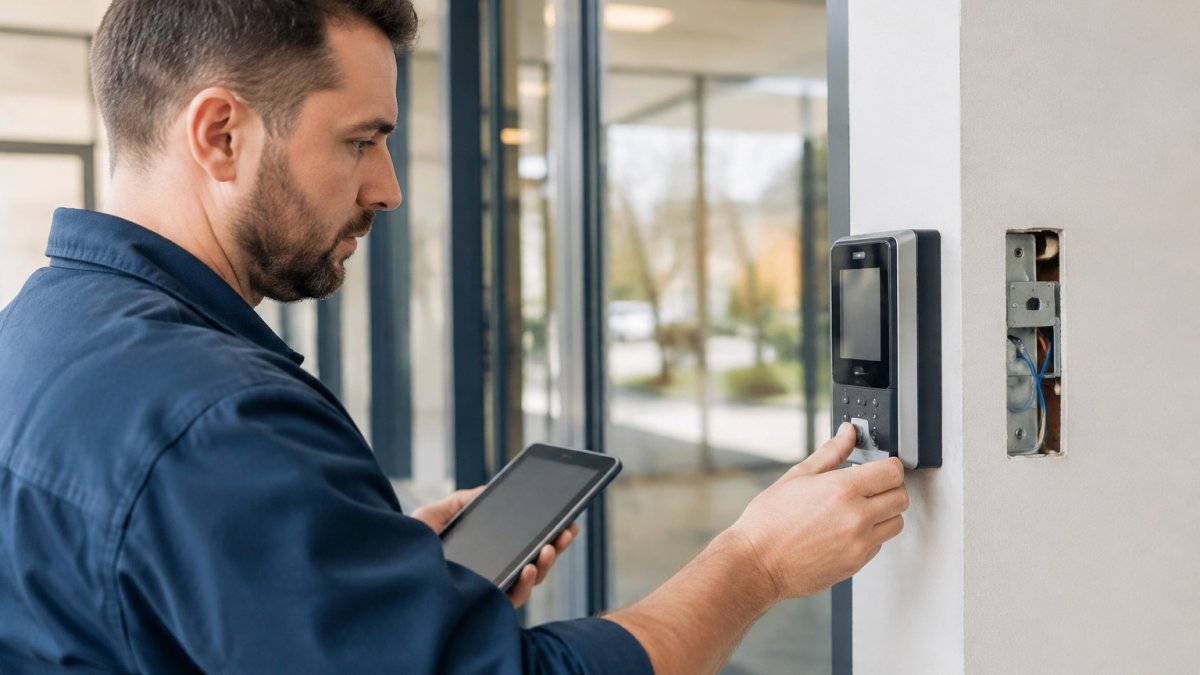
Access control integration is one of the most useful connections between fire and security. When a fire alarm activates, access control doors can release so occupants can exit without swiping a badge. Done correctly, this speeds evacuation and reduces crowding at locked exits.
Keep these points in mind:
- Release only the doors the fire code allows.
- Never release a door in a way that opens a secured area to unauthorized people during a fire.
- Use a hard-wired release signal from the fire panel, not just a network message.
Fire Alarm and Security System Integration: Architecture, Interoperability, and Network Segmentation
Integration depth depends on three things: what the panels can physically connect to, what protocols they speak, and how the resulting network is protected. The technical reality is a set of interface choices with real trade-offs.
Interface Types and What They Carry
- Dry contact relays: the most common and most reliable interface. The fire panel energizes or de-energizes a relay, and the intrusion or access panel reads the contact. Relays carry one bit each, so they suit life-safety actions such as door release, elevator recall, and HVAC shutdown, but not zone-level detail.
- Supervised signaling line circuits: addressable fire panels can share device-level events over a proprietary or open signaling line circuit. This gives granular event mapping but ties the integration to the panel manufacturer's ecosystem.
- IP gateways and protocol translators: devices that translate between fire panel protocols (manufacturer-specific or BACnet for building automation) and security platform protocols. They enable rich event sharing and remote diagnostics but introduce a networked device that must be supervised, patched, and monitored.
Assessing Interoperability Before You Buy
Before selecting equipment, confirm four things in writing from both vendors: the exact list of events the interface can transmit, the maximum number of distinct events or relays available, the latency between a fire event and the security platform's response, and the support policy for firmware updates on the interface device. A common pattern is that a gateway supports alarm and trouble but not supervisory signals, which matters if the AHJ expects valve tamper or low-pressure events to reach the monitoring station.
For legacy equipment, check whether the existing fire panel has spare relays or an unused communication port, and whether the intrusion panel accepts dry-contact zones or only its own bus devices. Retrofitting a conventional fire panel into a modern security platform often requires a relay module and a zone expansion card, and the labor for that is frequently underestimated.
Event Mapping Mechanics
Event mapping is the translation layer between the two systems: assigning each fire event to a specific intrusion or access action, which partition disarms, which doors release, which camera preset is called, and which priority code is sent to the central station. Keep the mapping table in the sequence of operations document and version it. When a device is replaced or a panel is upgraded, re-verify the mapping, because a new panel may report the same physical event under a different address or label.
Network Segmentation in Practice
Segmentation is not a single VLAN; it is a set of boundaries. A workable pattern for a commercial building is:
- A dedicated life-safety VLAN for fire panels and notification equipment, with no route to the business network.
- A separate security VLAN for intrusion panels, access control, and video, with limited, logged routes to the life-safety VLAN only for approved event traffic.
- A management VLAN for configuration access, reachable only through a jump host.
Where the fire panel supports it, enable encrypted communications between the panel and any gateway. Where it does not, treat the link as untrusted and place the gateway on the security VLAN rather than the life-safety VLAN.
Remote Access, Credentials, and Logging
Remote access to fire and security panels is a frequent weak point. Require multi-factor authentication for any remote session, disable default accounts, rotate credentials on a schedule, and log every configuration change with a timestamp and user ID.
Watch out: a gateway or remote-access appliance added for convenience and never patched becomes the easiest path into both the fire and security networks, treat it as a life-safety device in your patch and monitoring schedule, not as IT equipment.
Failure Modes to Design For
The integration should behave predictably when something breaks. Design and test for: loss of the network link between panels (fire notification must continue locally), loss of the gateway (hard-wired life-safety actions must still function), loss of power to the security panel (egress doors must fail in the code-required state), and loss of the central station communication path (local annunciation and a secondary path must take over).
Fire Alarm System Testing and Commissioning for Integrated Systems
Testing proves that the integration works when it counts. Commissioning should verify each fire-to-security action, each intrusion-to-fire action where permitted, and every fail-safe behavior.
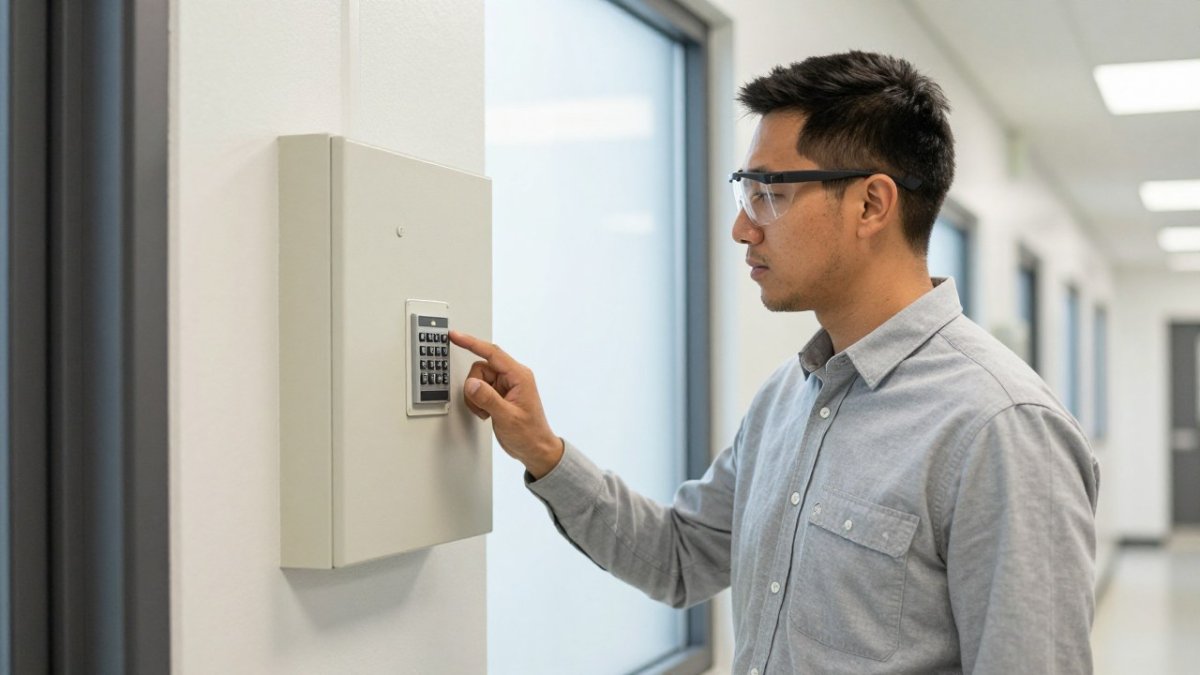
A practical test plan includes:
- Trigger each fire device and confirm the expected security response.
- Simulate power loss and confirm doors fail in the correct state.
- Test the monitoring station's receipt and handling of priority signals.
Keep written records. Inspectors and insurers will ask for them, and they make future troubleshooting faster. To learn how these systems are kept reliable over time after commissioning, read about long-term integrated system operation.
Planning Your Integration Project With Mt. Major Tech
A well-planned integration reduces risk, simplifies daily operation, and gives your team one clear view of the building. Mt. Before you sign with any integrator, learn what to look for in a service agreement.
If you are ready to start, review our integration services to see how we can support your project.
Frequently Asked Questions
How do fire alarm systems work with commercial intrusion detection?
Fire alarm and intrusion detection systems typically run on separate control panels with their own sensors, but they can share a common monitoring station, event log, and building management interface. When integrated, a verified fire signal can trigger defined responses such as releasing access-controlled doors or notifying security staff, while intrusion events remain isolated from life-safety circuits. Integration should follow the requirements of the applicable NFPA 72 and NFPA 731 standards and the local authority having jurisdiction, so that the fire alarm system retains priority and continues to function if the security network fails.
Can a fire alarm system automatically disarm an intrusion alarm?
Yes, but this should be designed carefully. Many facilities configure a fire alarm activation to place intrusion zones in a known state, such as suppressing door-open alarms along egress routes, so that evacuation is not delayed by security false alarms. Automatically disarming the entire intrusion system is generally not recommended, because it can leave the building unprotected during the emergency. A safer approach is to limit the response to specific zones and document the logic in the system design and sequence of operations.
What should be tested after integrating fire and intrusion systems?
Testing should confirm every defined interaction: fire signals releasing the correct doors, intrusion events not interfering with fire notification, and monitoring station signals arriving correctly for each event type. Test each device under both normal and failure conditions, including loss of communication between panels and power interruption. Keep written test records with dates, results, and corrective actions, and repeat the full test after any change to the programming, devices, or network.
What standards apply to integrating commercial fire alarm and security systems?
In the United States, NFPA 72 (National Fire Alarm and Signaling Code) governs fire alarm system design, installation, testing, and maintenance, and NFPA 101 (Life Safety Code) addresses egress and door release requirements. Intrusion systems commonly follow UL standards for their components and monitoring. Local building and fire codes, adopted by the authority having jurisdiction, control what is actually required for your building, so confirm details with your local fire marshal and building official before finalizing a design.