 ultimate-guide
Workplace Violence Prevention in Healthcare: 7 Steps
Table of Contents
- Why Workplace Violence Prevention Matters in Healthcare
- Workplace Violence Risk Assessment in Healthcare Settings
- Workplace Violence Prevention Training for Healthcare Workers
- Healthcare Workplace Violence Reporting Procedures
- Hospital Security Measures for Workplace Violence Prevention
- Building Your Violence Prevention Policy and Governance
- Measuring Program Effectiveness and Outcomes
- Post-Incident Support and Recovery
- Frequently Asked Questions
Last Updated: October 17, 2026
Why Workplace Violence Prevention Matters in Healthcare
Healthcare workers experience violence at rates far higher than other industries, with nurses, emergency department staff, and psychiatric professionals particularly vulnerable to patient assaults, verbal threats, and physical aggression, making workplace violence prevention healthcare a critical organizational priority (the CDC).
A comprehensive workplace violence prevention program isn't optional, it's essential infrastructure.
Healthcare settings present unique challenges: patients with altered mental states, intoxication, or psychiatric conditions may become aggressive without warning, and emergency departments operate 24/7 with unpredictable populations.
This guide walks you through seven concrete steps to build a workplace violence prevention healthcare program that protects your healthcare workers and strengthens operational resilience.
Workplace Violence Risk Assessment in Healthcare Settings
A workplace violence risk assessment is the foundation of any prevention program, identifying which departments, patient populations, and environmental factors create the highest risk. Without this baseline, prevention efforts become scattered and ineffective.
Identifying High-Risk Departments and Patient Populations
Not all healthcare settings carry equal risk.
Analyze incident data from the past 12-24 months: which departments reported the most violence-related incidents, what types of aggression occurred, and which patient populations were involved.
Interview department managers, nursing staff, and security personnel: where do you feel unsafe? Which situations escalate most frequently? What warning signs precede violence?
Conducting Environmental and Behavioral Hazard Reviews
Environmental design influences violence risk. Narrow hallways with limited escape routes, isolated work areas, poor lighting, and lack of communication systems increase vulnerability.
Behavioral hazard identification focuses on early warning signs: raised voice, pacing, clenched fists, verbal aggression, refusal to follow instructions, and invasion of personal space.
Document environmental hazards systematically: inadequate parking-area lighting, unsecured medication storage, missing barriers in waiting areas, limited emergency exit access, and communication dead zones.
Workplace Violence Prevention Training for Healthcare Workers
Staff education is the most direct lever for reducing violence incidents. When healthcare workers understand risk factors, recognize warning signs, and know de-escalation techniques, they prevent many situations from escalating, while training builds confidence and reduces anxiety about personal safety.

De-Escalation and Communication Skills
De-escalation is a set of communication and behavioral techniques that calm agitated individuals and reduce the likelihood of violence.
Specific techniques include validation ("I understand you're frustrated"), empathy ("This situation must be difficult"), and collaborative problem-solving ("Let's work together to help you").
Teach healthcare workers to recognize their own stress responses, since threatened staff may unconsciously become defensive or aggressive, escalating rather than calming the situation.
Recognizing Behavioral Warning Signs and Early Intervention
Healthcare workers need practical frameworks for identifying when a patient or visitor is becoming aggressive.
Early intervention means responding to warning signs before violence occurs: offering a quiet space away from stimulation, involving a family member or trusted staff member, addressing unmet medical needs like pain, and calling security or a behavioral health specialist for high-risk situations.
Train staff to communicate concerns immediately: a nurse noticing early warning signs should alert the charge nurse or security rather than managing alone.
Healthcare Workplace Violence Reporting Procedures
Incident reporting is critical: it creates accountability, generates data for program evaluation, and ensures injured staff receive appropriate care and support. Yet many facilities have low reporting rates because staff fear retaliation, believe nothing will change, or don't understand the process.
Creating a Non-Punitive Reporting Culture
Establish a clear policy: reporting violence is mandatory, protected, and never grounds for disciplinary action against the targeted staff member.
Communicate explicitly that reporting protects both staff and the organization: each report provides data about what triggers violence, which interventions work, and where prevention needs strengthening.
Make reporting easy with multiple channels: paper forms in break rooms, online portals, phone hotlines, and direct conversations with security or management.
Post-Incident Review and Documentation
After a violence incident, conduct a structured review within 72 hours while details are fresh.
Identify what worked and what didn't: did de-escalation prevent further escalation, did security respond appropriately, were warning signs missed, and what could have prevented the incident?
Ensure injured staff receive immediate medical evaluation, workers' compensation documentation, and access to counseling or employee assistance programs. Violence-related injuries create psychological trauma even when physical injury is minor.
Hospital Security Measures for Workplace Violence Prevention
Physical security and environmental design reduce opportunities for violence and enable rapid response when incidents occur. These measures work alongside training and policies, they're not replacements for them.
Physical Security and Environmental Design
Design healthcare spaces to minimize violence risk. Waiting areas should have adequate seating, clear sight lines, and visible security presence.
Secure high-risk items: medications, sharps, and equipment that could be used as weapons should be stored in locked areas accessible only to authorized staff.
Communication systems must be reliable and accessible. Staff in isolated areas need quick ways to call for help.
Access Control and Video Monitoring Systems
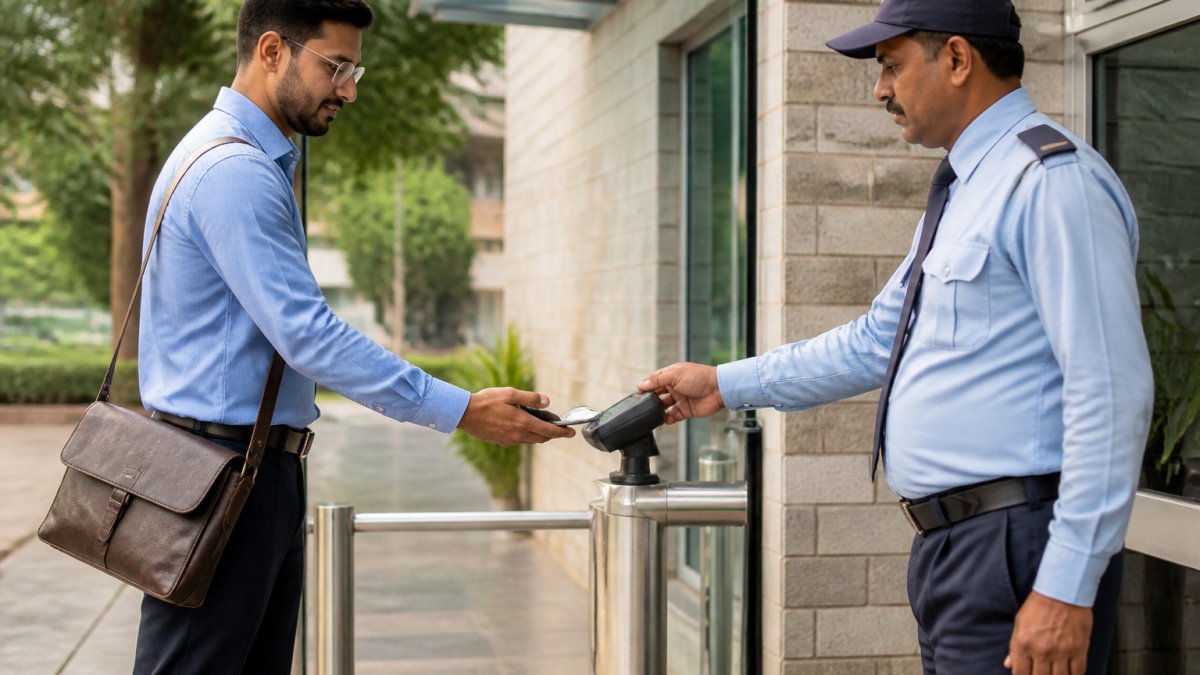
Unified access control systems regulate who enters restricted areas and create accountability. Badge-based systems track entry and exit, providing data if an incident occurs.
Video monitoring systems serve multiple purposes: they deter violence, they provide evidence if incidents occur, and they enable rapid response by security personnel.
At Mt. Major Tech, we integrate access control and video monitoring into unified platforms that reduce false alarms through AI-enabled analytics.
Building Your Violence Prevention Policy and Governance
Policies alone don't prevent violence, but they establish expectations, assign responsibility, and create frameworks for consistent response. A violence prevention policy should address risk assessment, training requirements, reporting procedures, incident response, and post-incident support.
Establishing Clear Policies and Response Protocols
Your policy should define workplace violence broadly: physical assaults, verbal threats, intimidating behavior, property damage, and harassment.
Define response protocols for different situations. When a patient becomes verbally aggressive, who is called first, nursing supervisor or security? What de-escalation attempts should staff make before escalating?
Address weapons and security measures: are visitors screened for weapons? Are staff permitted to carry personal protective equipment like pepper spray?
Assigning Ownership and Implementation Timelines
Prevention programs fail when no one owns them. Assign a violence prevention coordinator with clear authority and resources.
Create an interdisciplinary violence prevention committee including nursing, emergency medicine, psychiatry, security, human resources, and employee representatives.
Establish implementation timelines. Risk assessment should be completed within 30 days. Initial training should be completed within 60 days for all patient-facing staff.
Measuring Program Effectiveness and Outcomes
A prevention program without measurement is just activity. Track metrics that indicate whether your efforts are actually reducing violence and improving staff safety.
Tracking Incident Frequency, Severity, and Response Times
Monitor the number of violence incidents reported each month and quarter. Categorize incidents by type: verbal threats, physical assaults, property damage, or harassment.
Measure response times: how long between incident occurrence and security arrival? How long between incident and incident reporting? How long between incident and post-incident review?
Compare your facility's incident rates to benchmarks from similar healthcare settings.
Evaluating Training Effectiveness and Staff Awareness
Assess staff knowledge and confidence before and after training.
Conduct periodic competency assessments: observe staff interactions with patients to see whether de-escalation techniques are being applied in real situations.
Measure reporting culture by tracking the ratio of reported incidents to estimated actual incidents. If staff are reporting incidents consistently, reporting rates should be relatively stable.
Post-Incident Support and Recovery
Violence creates psychological injury alongside physical injury. Staff who experience violence often develop anxiety, hypervigilance, and reduced job satisfaction.
Immediate response matters. Injured staff should receive medical evaluation, first aid, or emergency care as needed.
Offer counseling or mental health support through your employee assistance program.
Allow time off for medical appointments, counseling, or recovery.
Conduct a team debrief after serious incidents.
Healthcare facilities that invest in violence prevention see measurable improvements: fewer incidents, faster response times, better staff retention, and improved patient safety. Major Tech, we integrate AI-enabled surveillance, unified access control, and video analytics into comprehensive security systems that support these prevention efforts.
Frequently Asked Questions
What should a comprehensive workplace violence prevention program include in healthcare?
An effective program combines risk assessment, staff training, clear reporting procedures, physical security measures, and incident response protocols. Start with a hazard assessment to identify high-risk areas and patient populations. Establish written policies, conduct regular de-escalation training, implement non-punitive incident reporting, and deploy appropriate security measures such as access control and video monitoring. Include post-incident support for affected workers and regularly evaluate outcomes through incident tracking and staff feedback.
How can healthcare organizations improve workplace violence risk assessment?
Begin by analyzing past incidents and near misses to identify patterns. Assess each department and care setting separately, as emergency departments and psychiatric units face different risks. Evaluate environmental factors like lighting, exits, and alarm systems. Interview nursing staff and other frontline workers about their safety concerns. Document behavioral warning signs specific to your patient population. Review staffing levels and patient acuity. Update your assessment annually or after significant incidents to reflect changing conditions and new threats.
What training helps healthcare workers prevent and de-escalate workplace violence?
Effective training covers threat assessment, verbal de-escalation techniques, body language awareness, and safe physical positioning. Teach staff to recognize behavioral warning signs early and intervene before escalation occurs. Include communication skills for managing difficult interactions with patients and visitors. Provide scenario-based practice with feedback. Training should be mandatory for all patient-facing staff, repeated annually, and tailored to your specific care setting. Measure training effectiveness by tracking post-training incident rates and staff confidence in their ability to respond.
How should healthcare organizations handle workplace violence reporting and investigation?
Create a non-punitive reporting system so staff feel safe reporting incidents without fear of retaliation. Establish clear documentation requirements that capture what happened, who was involved, injuries sustained, and immediate response actions. Investigate all incidents promptly, including near misses, to identify root causes. Involve the affected worker in the review process. Document findings and corrective actions. Track all reports to identify trends by department, time of day, or patient population. Use this data to refine your prevention strategies and demonstrate commitment to worker safety.
What physical security measures reduce workplace violence in hospitals?
Implement layered security: controlled access to high-risk areas, panic buttons or duress alarms at nursing stations, video surveillance with clear sightlines, and adequate lighting in all spaces. Design environments to minimize blind spots and provide staff with clear escape routes. Position furniture to avoid entrapment. Install security doors that can be locked during emergencies. Consider metal detectors in emergency departments if risk assessment warrants it. Ensure adequate staffing so workers are never alone in high-risk areas. Pair physical measures with staff training for maximum effectiveness.
How can we support healthcare workers after a workplace violence incident?
Provide immediate medical evaluation and psychological first aid. Offer counseling or employee assistance program services without requiring workers to pay out-of-pocket. Allow time off for recovery without penalty. Conduct a supportive debriefing with the affected worker and their team. Communicate that the organization takes the incident seriously and will take corrective action. Follow up regularly to check on the worker's wellbeing. Document support provided for compliance purposes. Create a culture where workers feel supported rather than blamed, which encourages future reporting and helps prevent trauma-related turnover.
How does workplace violence prevention differ across healthcare settings?
Emergency departments face acute, unpredictable threats from intoxicated or agitated patients. Psychiatric units deal with patients whose illness directly increases violence risk. Long-term care facilities may see violence from dementia patients without malicious intent. Outpatient clinics typically face verbal threats and harassment. Each setting requires tailored risk assessment, training emphasis, and security measures. Emergency departments may prioritize rapid de-escalation and rapid response protocols. Psychiatric units need trauma-informed approaches and medication management. Tailor your prevention program to your specific patient populations and care delivery model.
What metrics should we track to measure workplace violence prevention program effectiveness?
Track incident frequency (total reports and trends over time), severity (injuries requiring medical care, days lost), and response time (how quickly staff or security responded). Monitor reporting rates to ensure staff feel safe reporting. Measure training completion and post-training assessment scores. Survey staff confidence in their ability to recognize and respond to threats. Calculate injury prevention outcomes and workers' compensation claims related to violence. Compare metrics year-over-year to identify whether your program is reducing incidents. Use this data in regular program reviews to refine strategies and demonstrate return on investment to leadership.