 ultimate-guide
How Do Biometric Controls Align With SOC 2 Audit Requirements?
Last Updated: October 24, 2026
Quick Summary
Biometric security compliance SOC 2 requires mapping biometric controls to Trust Services Criteria, demonstrating design effectiveness through testing and documentation, and protecting biometric templates with encryption. Auditors evaluate whether biometric authentication is tested regularly, monitored, and supported by audit evidence showing it operates as intended.
- Map biometric capabilities to SOC 2 common criteria CC6.1 through CC6.3 and CC7.2 through CC7.3 with specific evidence requirements.
- Document enrollment workflows end-to-end with identity verification, approvals, and reconciliation to HR records quarterly.
- Encrypt biometric templates at rest using AES-256 and in transit over TLS, with keys stored separately from template databases.
- Test biometric systems quarterly including enrollment accuracy, rejection testing, fallback procedures, and access removal verification.
- Establish offboarding procedures with named owners to ensure biometric unenrollment happens on the same timeline as other access removal.
Table of Contents
- What SOC 2 Requires for Biometric Security Controls
- SOC 2 Access Control Requirements and Biometric Authentication
- Biometric Authentication Security Best Practices for Audit Readiness
- Building Your SOC 2 Audit Evidence Checklist for Biometric Systems
- SOC 2 Access Management Tools and Biometric Integration
- Biometric Data Privacy and Protection for SOC 2 Compliance
- Preparing Your Biometric System for SOC 2 Audit
- Frequently Asked Questions
What SOC 2 Requires for Biometric Security Controls
Biometric security compliance SOC 2 starts with understanding what the framework evaluates. SOC 2 doesn't prescribe technologies; it requires organizations to demonstrate that controls are designed effectively and operating as intended.
Design means your biometric architecture addresses identified risks; effectiveness means you test it regularly and document that it works.
Biometric controls address access management directly, which is foundational to the Trust Services Criteria. Replacing password-based access with fingerprint, iris, or facial recognition reduces a primary attack surface.
SOC 2 Access Control Requirements and Biometric Authentication
SOC 2 access control requirements come from the common criteria (CC) series, primarily CC6.1 through CC6.3, covering logical access, user registration and deprovisioning, and role-based authorization. Biometrics aren't named in the framework but strengthen these criteria when you show how they operate as a control. Build a control matrix mapping each biometric capability to its criterion, then collect evidence against it.
Mapping biometric controls to Trust Services Criteria
A workable mapping looks like this:
- CC6.1 (logical access security), Biometric authentication enforces identity verification at the point of access. Evidence: configuration records showing biometric authentication is required for in-scope systems, plus authentication logs showing successful and failed attempts.
- CC6.2 (user registration and authorization), Biometric enrollment is a registration event. Evidence: enrollment approval records, identity-proofing documentation, and a list of enrolled users reconciled to the HR roster.
- CC6.3 (role-based access and least privilege), Biometric templates should be tied to role assignments, not granted ad hoc. Evidence: role-to-enrollment mapping and periodic access reviews confirming each enrolled user still holds the role that justifies access.
This matrix is what auditors actually test against. A biometric system that works but cannot be tied to a criterion is a control without a home.
Identity verification and enrollment controls
Enrollment is the control point most organizations under-document. SOC 2 requires access be restricted to authorized individuals, and enrollment is where that authorization is operationalized.
Document the enrollment workflow end to end: who requests, who approves, how identity is verified before capture, and where the approval record is stored.
Access reviews and offboarding procedures
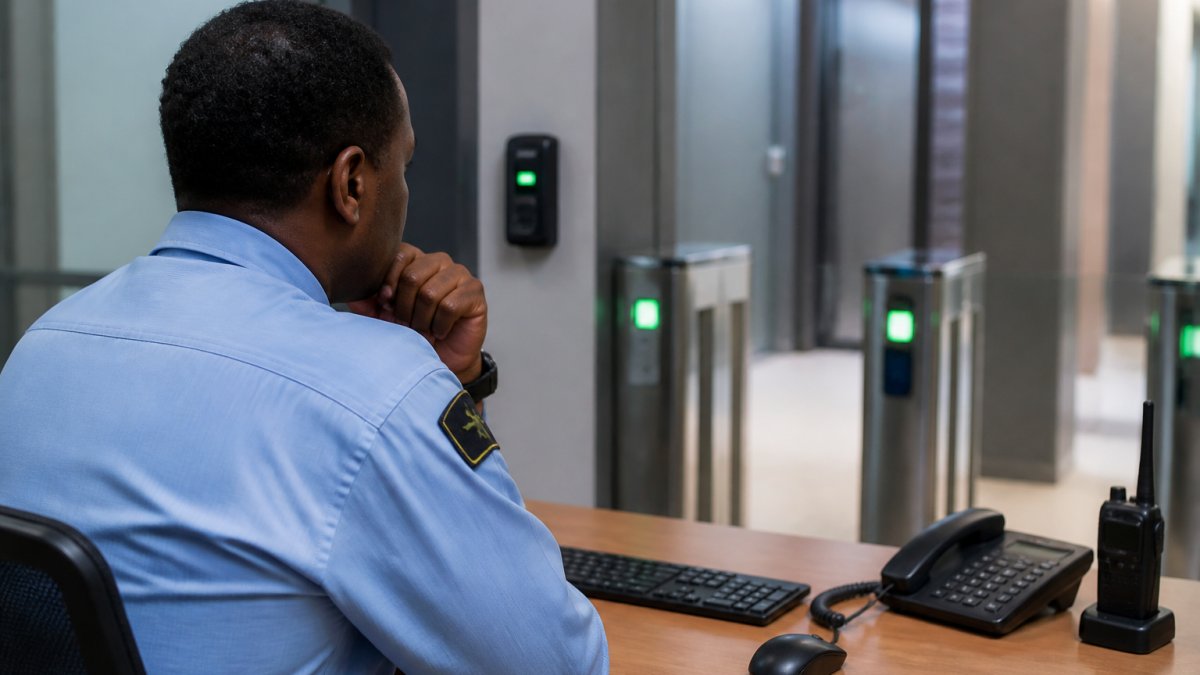
Access reviews are mandatory under CC6.3. Biometric enrollment records are binary, a person is either enrolled or not, so pull the list quarterly, reconcile it to the active employee and contractor roster, and have the system owner sign off on exceptions.
Offboarding is higher-risk. Biometric unenrollment must happen on the same timeline as other access removal. A frequent failure is removing the person from Active Directory and the badge system but leaving their fingerprint template active on a standalone reader.
Biometric controls map directly to SOC 2 common criteria, with each capability generating specific audit evidence requirements.
| SOC 2 Criterion | Biometric Control | Evidence Required |
|---|---|---|
| CC6.1 (logical access security) | Biometric authentication at access point | Configuration records and authentication logs |
| CC6.2 (user registration and authorization) | Biometric enrollment as registration event | Enrollment approvals and identity-proofing docs |
| CC6.3 (role-based access and least privilege) | Templates tied to role assignments | Role-to-enrollment mapping and access reviews |
| CC7.2 (monitoring) | Biometric events feed to SIEM | Log exports, alert rules, and sample alerts |
| CC7.3 (incident evaluation) | Failed attempts and overrides trigger evaluation | Incident tickets and resolution records |
Biometric Authentication Security Best Practices for Audit Readiness
Audit readiness means preparing evidence before auditors arrive. Biometric data is sensitive, and the framework treats it as confidential information requiring encryption, access controls, and retention limits.
Multi-factor authentication and fallback procedures
Biometrics work best within a multi-factor approach. SOC 2 doesn't mandate MFA, but it's increasingly expected for sensitive systems.
Fallback procedures are essential. If fingerprint recognition is your only access method and the reader fails, you've created a denial-of-service risk.
Maintain an emergency override procedure, for example, a manager PIN granting temporary access while the system is repaired. The override must be logged, time-limited, and approved.
Encryption and data protection for biometric templates
Biometric templates, the mathematical representations of fingerprints, iris patterns, or facial features, must be encrypted at rest and in transit. Many organizations invest in hardware but neglect this data protection layer.
At rest, use industry-standard encryption; in transit, templates moving between reader and access control system should travel over encrypted channels.
Storing templates in plain text or with weak encryption is a common mistake.
Building Your SOC 2 Audit Evidence Checklist for Biometric Systems
Evidence transforms good intentions into compliance. Auditors don't evaluate features; they evaluate documented proof that controls work.
Documentation requirements for control design and testing
Your biometric access control policy should document the system's purpose, scope, and alignment with SOC 2, answering: Who can enroll? Who approves access changes? What happens when someone is denied? How often is the system tested?
Control testing is where evidence comes together. Test your biometric system at least quarterly. Testing should include:
- Enrollment accuracy: Verify that enrolled users can authenticate consistently
- Rejection testing: Confirm that non-enrolled users cannot gain access
- Fallback procedures: Test emergency override and ensure it's logged
Document each test with dates, results, and corrective actions if tests fail. This documentation becomes your evidence package for the auditor.
Vendor risk and shared responsibility
When you deploy biometric systems, you're often relying on a vendor for hardware, software, or cloud services. SOC 2 requires that you understand vendor responsibilities and maintain oversight.
Your service agreement should specify:
- Encryption standards the vendor will use
- Data retention policies for biometric templates
- Incident notification procedures
Shared responsibility means you're accountable even if a vendor operates the system: if a vendor stores unencrypted templates and they're breached, that's your compliance failure. Request evidence that vendors meet SOC 2 requirements and include their audit reports in your evidence package.
SOC 2 Access Management Tools and Biometric Integration
Biometric systems rarely operate in isolation.
Integrating biometric readers with broader access infrastructure creates a system-of-systems. Each component must log access events, and logs must be correlated to show who accessed what.
Ensure your biometric system can export logs in a format your SIEM can ingest. Configure the system to log every authentication attempt, including failed attempts.
Test the integration regularly: verify logs flow from reader to central logging.
Biometric Data Privacy and Protection for SOC 2 Compliance
Privacy is one of SOC 2's five Trust Services Criteria, and biometric data raises the stakes because it cannot be rotated: a breached password is reset, a breached fingerprint template is permanent. The privacy criterion (P series) requires notice, choice and consent, collection limitation, use limitation, retention, and disposal, each with a specific biometric implementation.
Templates versus raw images
The most important design decision is whether your system stores raw biometric images or irreversible templates. Raw images can be reused, replayed, or analyzed for attributes the user never consented to share.
Document which form you store and why. Raw images require stronger justification, tighter access controls, and a defined deletion schedule. For templates, confirm the vendor's protection scheme, many combine irreversible feature extraction with a cryptographic key so the template is useless without it.
Encryption and key management
Templates must be encrypted at rest and in transit. At rest, use AES-256 or equivalent and document key management: where keys live, who can access them, and how they're rotated.
In transit, templates moving from reader to access control system should travel over TLS. Auditors will request configuration evidence: encryption settings, key management policy, and a sample key rotation log.
Consent, notice, and use limitation
The privacy criterion requires individuals be informed about what is collected and how it's used, with collection limited to what's necessary.
Use limitation matters too: biometric data collected for physical access shouldn't be repurposed for time-and-attendance, emotion analysis, or marketing without separate notice and consent. Document permitted uses in policy and configure systems so templates can't be queried for secondary purposes.
Retention and deletion
Retention should be tied to business need, typically employment or authorized access plus a short wind-down. Deletion must be verifiable: unenrollment should purge the template, not just flag it inactive. Auditors will ask for a deletion log, a database query showing the record is gone, or a vendor attestation confirming purge from backups on a defined schedule.
NIST Privacy Framework guidance on biometric data protection provides a useful crosswalk for organizations that want to align SOC 2 privacy controls with a broader privacy program.
Preparing Your Biometric System for SOC 2 Audit
Audit preparation begins months before the auditor arrives.
Conduct an internal assessment using the same procedures an auditor will: attempt unauthorized access, verify failed attempts are logged, confirm access removal works, and validate encryption is active.
Assemble your evidence package. Organize documentation chronologically: policies, procedures, test results, vendor agreements, and access logs.
Work with your biometric vendor early. Request evidence of their SOC 2 compliance or security practices.
Schedule a pre-audit meeting to discuss the biometric system's scope and the evidence you'll provide.
Biometric security compliance for SOC 2 audits requires treating biometric controls as a system: technology, processes, documentation, and vendor oversight working together. At Mt. If your organization is preparing for a SOC 2 audit or planning to implement biometric controls, contact Mt. Major Tech to discuss how integrated biometric systems support compliance while strengthening security.
Frequently Asked Questions
Does SOC 2 require biometric authentication?
SOC 2 does not mandate biometric authentication specifically. Instead, the Trust Services Criteria require organizations to implement appropriate access controls and identity verification mechanisms based on risk assessment and the sensitivity of customer data. Biometric authentication is one option that can satisfy these requirements. Many organizations use multi-factor authentication combining biometrics with other methods like passwords or smart cards. The choice depends on your risk profile, the criticality of your systems, and your audit scope.
What evidence do auditors review for biometric security controls?
SOC 2 auditors examine documentation of control design, including system architecture, biometric technology specifications, and how the system integrates with your access management framework. They review control testing results showing that biometric authentication functions as intended, access logs demonstrating the system is actively used, periodic access reviews confirming that user permissions remain appropriate, and evidence of encryption protecting biometric templates. Auditors also assess your vendor risk management if biometric systems are provided by third parties, and they verify that biometric data is protected according to your privacy policies and applicable data protection standards.
How should biometric access controls be documented for a SOC 2 audit?
Document your biometric system's purpose, scope, and how it maps to specific Trust Services Criteria (typically security and availability). Create a control design document describing the technology, enrollment process, authentication workflow, and fallback procedures if biometric authentication fails. Maintain records of access reviews showing periodic verification that user access remains appropriate. Log all biometric authentication events and keep evidence of control testing, such as penetration testing results or periodic system validation. Document your data retention and destruction policies for biometric templates, and include evidence of encryption, access restrictions, and monitoring. Ensure your vendor agreements clearly define shared responsibilities for security, audit cooperation, and data protection.
What is the difference between SOC 2 Type I and Type II for biometric controls?
SOC 2 Type I evaluates whether your biometric access controls are designed appropriately at a point in time, typically requiring a single assessment. Type II evaluates both the design and the effectiveness of those controls over a period of time (usually 6 months to a year), requiring ongoing monitoring, testing, and evidence collection. For biometric systems, Type II provides stronger assurance because it demonstrates that your controls actually function as intended over time, that access reviews occur regularly, and that any control issues are identified and remediated. Type II is generally preferred by customers who depend on your security, particularly in regulated industries.
What biometric authentication limitations should I plan for in SOC 2 compliance?
Biometric systems can fail due to poor image quality, enrollment issues, or sensor malfunctions. Plan fallback authentication methods (such as PIN, password, or smart card) to ensure users can still access critical systems if biometric authentication is unavailable. Document these fallback procedures and test them regularly. Document known error rates and false rejection/acceptance rates for your biometric technology. Address privacy concerns by limiting biometric data collection to what is necessary, encrypting templates, and controlling who can access them. Ensure your privacy policies and consent procedures comply with applicable data protection standards. Include contingency procedures for biometric system outages in your audit scope and risk assessment.
How do I ensure biometric data privacy meets SOC 2 standards?
Encrypt biometric templates both in transit and at rest using industry-standard encryption. Restrict access to biometric data to authorized personnel only, and document who has access and why. Implement audit logging to track all access to biometric information. Establish data retention and destruction policies specifying how long biometric data is kept and how it is securely deleted. Ensure your privacy policy clearly explains what biometric data you collect, how you use it, and who has access to it. If you use a biometric vendor, include strong data protection requirements in your vendor agreement. Conduct periodic security assessments of your biometric system and document the results as part of your SOC 2 audit evidence.
Can I integrate biometric controls with existing access management tools for SOC 2?
Yes, biometric controls can integrate with SOC 2 access management tools and platforms. The integration should log all authentication events, support role-based access control, and enable periodic access reviews. Ensure the combined system provides audit trails showing who accessed what and when, supports multi-factor authentication workflows, and can enforce access policies consistently. When integrating systems, document the shared responsibilities between your organization and any third-party vendors. Test the integration thoroughly to confirm that biometric authentication triggers the correct access decisions and that all events are logged properly. Include the integrated system architecture in your audit scope documentation so auditors understand the full control environment.