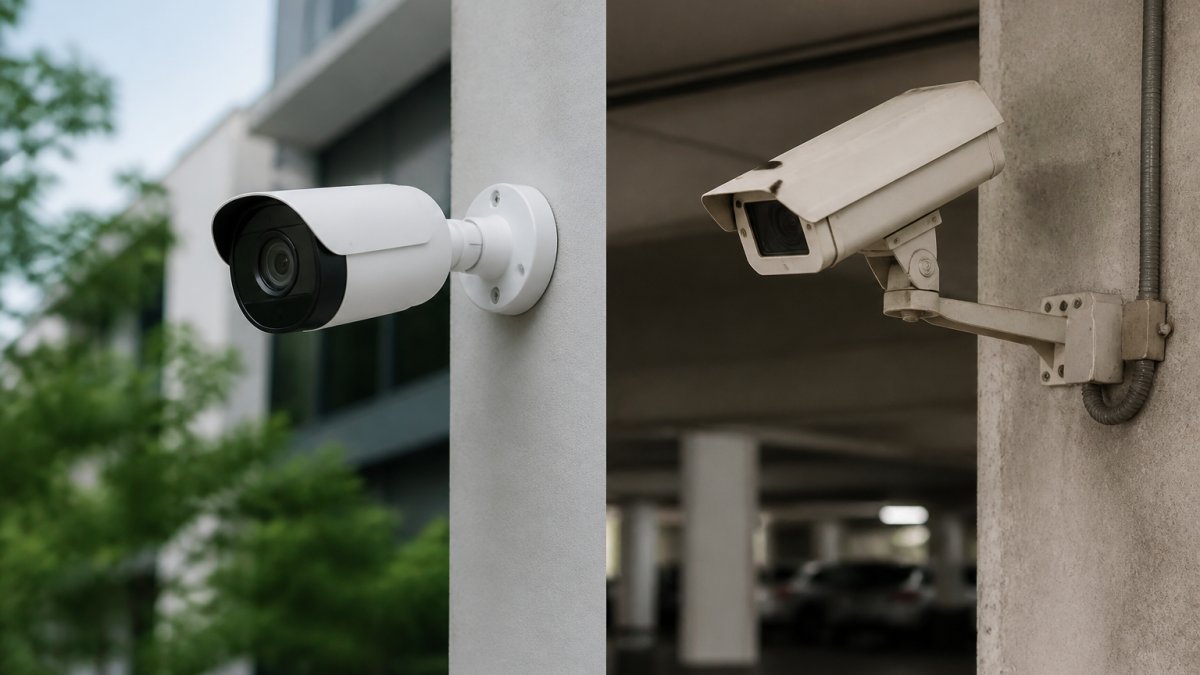
 comparison
AI Surveillance vs Traditional CCTV: 2026 Guide
Table of Contents
- AI Surveillance vs Traditional CCTV: Core Differences
- Detection Accuracy and False Alarm Reduction in Commercial Surveillance
- Benefits of AI Video Analytics for Business Operations
- Integrating AI with Legacy CCTV Systems
- Cost Comparison: Capital and Operating Expenses
- Data Privacy, Compliance, and Cybersecurity Risks
- Which System Should You Choose?
- Frequently Asked Questions
Last Updated: October 5, 2026
AI Surveillance vs Traditional CCTV: Core Differences
AI surveillance and traditional CCTV systems process and respond to footage differently, directly impacting operational costs, response times, and security effectiveness.
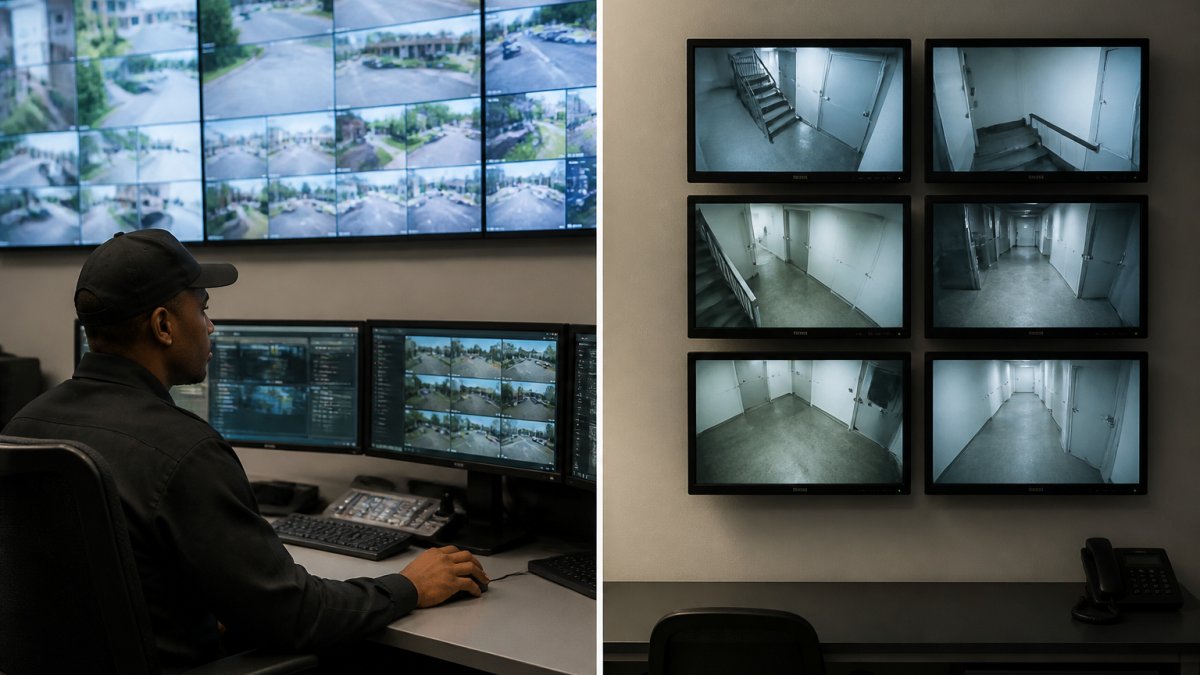
Traditional CCTV systems capture video continuously and store it on local or cloud servers. Security teams must actively watch monitors or review footage after incidents, with the system recording everything equally, a delivery person receives the same recording quality as a security threat.
AI surveillance systems, by contrast, analyze video in real time using deep learning algorithms. These systems don't just record; they understand what they're seeing. They classify objects, detect anomalies, and generate alerts before human intervention becomes necessary.
How AI Video Analytics Work
AI video analytics applies machine learning models to incoming video streams, recognizing specific objects (people, vehicles, packages, PPE compliance, unusual movement patterns) and sending immediate alerts rather than waiting for manual review.
The technology runs on edge computing devices (analyzing locally, reducing bandwidth and latency) or cloud-based processing (offering more power but requiring consistent connectivity).
Traditional Motion Detection and Recording
Traditional systems use basic motion sensors that trigger recording when movement crosses a threshold. These sensors cannot distinguish between a falling leaf and an intruder. False positives are common, which explains why security teams often become desensitized to alerts. The system records footage, but analysis happens manually and retroactively.
Detection Accuracy and False Alarm Reduction in Commercial Surveillance
Traditional systems generate constant false positives from weather, animals, shadows, and traffic. AI systems dramatically reduce these through object classification, learning to distinguish genuine threats from irrelevant motion.
AI algorithms distinguish context: a delivery truck is classified as expected, while an unauthorized person in a restricted zone triggers an alert, ensuring teams respond to genuine incidents.
Many facilities report that reducing false alarms alone justifies AI adoption, as staff remain alert and response times improve.
Benefits of AI Video Analytics for Business Operations
AI surveillance generates metadata about facility usage, traffic patterns, and operational efficiency, insights traditional CCTV cannot provide.
Faster Incident Response and Real-Time Alerts
AI systems detect and alert within seconds, compressing incident response time from minutes to seconds with immediate video context.
Traditional systems require manual detection and footage review, enabling only post-incident investigation. Real-time AI alerts allow prevention.
Operational Efficiency and Loss Prevention
AI video analytics monitors door access patterns, traffic flow bottlenecks, and safety compliance. Healthcare facilities verify PPE compliance; manufacturing plants monitor production and loss prevention zones.
Integrating AI with Legacy CCTV Systems
Modern AI systems integrate with existing cameras and recording hardware, preserving capital investment while adding intelligence. Successful integration requires understanding compatibility, architecture, and timelines.
Compatibility Assessment and Hardware Requirements
Analog CCTV systems cannot integrate with modern AI platforms without upgrading to IP-based cameras and network video recorders, a partial rip-and-replace costing more than adding AI to existing IP infrastructure.
IP-based systems integrate more easily: your existing NVR continues functioning while AI software analyzes the stream in parallel, supplementing rather than replacing it.
Network bandwidth is critical: each IP camera generates 1-8 Mbps. A 16-camera facility at 4 Mbps each needs 64 Mbps available bandwidth. Saturated networks require infrastructure upgrades before AI deployment.
Integration Architecture: Edge vs. Cloud Processing
The integration method you choose determines cost, latency, and operational complexity.
Edge-based integration deploys AI hardware on-site, analyzing video locally with minimal latency (under 1 second). You maintain full control and don't depend on cloud connectivity, but you're responsible for maintaining the appliance and applying updates.
Cloud-based integration streams video to a cloud platform for analysis, requiring reliable internet (5-10 Mbps per camera) and introducing 5-15 second latency. It shifts maintenance to the provider but creates service dependency and data residency considerations.
Hybrid integration combines edge processing for real-time alerts with cloud backup for long-term storage and advanced analytics, providing fast response and cloud scalability.
Integration Process and Timeline
Integration typically follows: network audit (1-2 weeks), infrastructure upgrades if needed (2-8 weeks), AI platform deployment (1-2 weeks), model training and tuning (2-4 weeks), and testing (1-2 weeks). Total: 6-16 weeks depending on readiness and complexity.
Cost Implications of Integration
Adding AI to existing IP infrastructure costs $5,000-$15,000 for a small-to-medium facility (16-32 cameras). Upgrading from analog systems adds $20,000-$50,000 for camera and cabling replacement.
Cloud-based integration costs $2,000-$8,000 upfront plus $200-$500 monthly. Edge-based integration has higher initial cost but lower recurring expenses.
Common Integration Pitfalls
Common pitfalls include underestimating bandwidth, deploying untuned models (causing alert fatigue), failing to integrate alerts with incident response, and not planning for ongoing maintenance. Experienced integrators help avoid these issues.
Cost Comparison: Capital and Operating Expenses
Understanding the total cost of ownership requires examining both upfront investment and ongoing expenses.
Initial Investment and Scalability
Traditional CCTV upfront costs scale linearly with facility size, each camera adds proportional expense.
AI systems scale more efficiently: one processor analyzes dozens of cameras. Cloud-based AI shifts capital expenditure to operational expenditure, spreading costs over time.
Long-Term Operating Costs and Maintenance
Traditional systems require ongoing hardware maintenance, storage expansion, and manual review labor, with storage costs growing indefinitely.
AI systems reduce OPEX through automation: incident review becomes targeted, storage needs decrease, and cloud systems eliminate on-site hardware management.
| Cost Factor | Traditional CCTV | AI Surveillance |
|---|---|---|
| Initial hardware | Lower | Higher |
| Processing power | Minimal | Significant |
| Storage growth | Continuous | Reduced through filtering |
| Manual review labor | High | Low |
| Maintenance burden | Moderate | Minimal (cloud) |
| Scalability cost | Linear | Sub-linear |
Data Privacy, Compliance, and Cybersecurity Risks
Surveillance systems create privacy and security obligations varying by facility type and location. AI systems introduce additional compliance considerations and cybersecurity risks requiring explicit planning.
Applicable Regulatory Frameworks
Multiple federal and state regulations govern how commercial properties handle surveillance footage and the data AI systems generate.
HIPAA requires healthcare facilities treat surveillance footage as protected health information with access controls, audit logs, encryption, and retention limits (typically 30-90 days).
GLBA requires financial institutions implement administrative, technical, and physical safeguards for surveillance systems, including access restrictions, encryption, and incident response. Breaches must be reported within 60 days.
State privacy laws (CCPA, Virginia, Colorado, Connecticut, Utah) regulate biometric data collection. Facial recognition and gait analysis require individual notification and deletion rights. Non-compliance carries $2,500-$7,500 per violation penalties.
State surveillance laws vary: some require two-party audio consent; others restrict surveillance in private areas. Violations create civil and criminal liability.
ADA (Americans with Disabilities Act) doesn't directly regulate surveillance but requires that security systems, including those using AI, don't discriminate against individuals with disabilities.
Compliance Obligations for Video Storage and Access
Once footage is recorded, you have legal obligations around retention, access, and deletion.
Retention policies must be documented and enforced. Automated deletion prevents liability from unnecessary retention.
Role-based access controls must limit viewing: security sees all footage, managers see their department, executives see high-risk areas. Access logs must track who viewed what and when.
Secure deletion uses cryptographic erasure or secure wiping protocols, simple file deletion allows forensic recovery. Cloud systems should provide deletion certificates.
Cybersecurity Risks Specific to AI Surveillance Systems
AI surveillance systems create cybersecurity risks that traditional CCTV systems don't face, primarily because they're networked, process valuable data, and generate metadata attackers can exploit.
AI systems require internet connectivity, creating attack surface. Isolate surveillance systems on a separate VLAN with restricted access to prevent compromised cameras from accessing other networks.
Credential compromise enables attackers to access feeds, disable alerts, or delete footage. Require strong passwords, multi-factor authentication, and API keys for service accounts rotated regularly.
Ransomware encrypts footage and demands payment. Mitigate by maintaining offline backups, implementing network segmentation, and deploying endpoint detection tools.
AI metadata (object classifications, movement patterns, facility usage) can reveal operational details enabling physical attacks or theft. Encrypt and access-control metadata as strictly as footage.
Comparing Security Posture: Traditional vs. AI Systems
Offline CCTV systems eliminate cybersecurity risks but sacrifice remote access and cloud analytics. Online systems enable alerts and remote access but require cybersecurity protections.
AI systems require connectivity, creating cybersecurity obligations but enabling faster response and operational insights.
On-premise AI reduces data exposure but requires you to patch appliances and maintain firewalls. Cloud-based AI shifts responsibility to the provider, but you remain liable for compliance breaches.
Compliance and Security Best Practices
Best practices: conduct compliance audits, develop retention policies with automated deletion, implement role-based access controls, segment networks with VLANs, require multi-factor authentication, encrypt footage, maintain offline backups, conduct annual security assessments, document procedures, and verify provider certifications.
Which System Should You Choose?
The decision depends on your facility's specific requirements, not on which technology is universally "better."
Choose traditional CCTV if your facility has simple security needs, limited budget for technology investment, and existing infrastructure you want to preserve. Traditional systems work adequately for basic recording and post-incident investigation.
Choose AI surveillance if you need real-time threat detection, have false alarm fatigue from current systems, require operational insights beyond security, or manage a complex facility with multiple buildings or zones. AI systems justify their higher initial cost through faster response, reduced labor, and operational efficiency.
Many facilities benefit from a hybrid approach: AI analytics on high-risk areas with traditional recording in lower-priority zones. This balances capability with cost.
The gap between traditional and AI surveillance systems continues to narrow in cost while widening in capability. Whether you're upgrading existing systems or building new security infrastructure, professional guidance ensures your investment protects your assets effectively. Book Online to discuss how AI surveillance and smart access control can strengthen your facility's security posture while reducing operational burden.
Frequently Asked Questions
Can AI surveillance be integrated into existing traditional CCTV systems?
Yes. AI video analytics can be layered onto existing traditional CCTV infrastructure without replacing all hardware. Modern video management software (VMS) and edge computing devices can process video from legacy cameras, adding deep learning algorithms and object classification capabilities. However, older analog systems may require NVR (Network Video Recorder) upgrades or network improvements to handle the bandwidth and processing demands. Integration complexity depends on your current system's age and architecture, newer IP-based systems integrate more seamlessly than older analog setups.
How much does AI surveillance cost compared to traditional CCTV?
AI surveillance typically involves a different cost structure compared to traditional CCTV, with varying upfront and operational expenditures. Long-term total cost of ownership (TCO) depends on your facility size, monitoring requirements, and labor costs. For specific pricing for your property, contact Mt. Major Tech for a custom quote based on your current infrastructure and goals.
Does AI surveillance reduce false alarms in commercial security?
Yes significantly. Traditional motion detection triggers alarms from wind, shadows, animals, and weather changes, overwhelming security teams. AI-powered systems use object classification and anomaly detection to distinguish between genuine threats and environmental noise, significantly reducing false positives in typical commercial installations. This improves incident response time, reduces alert fatigue, and allows your security team to focus on real threats. The accuracy improvement is one of the strongest business cases for upgrading to AI-based surveillance.
What are the privacy and compliance risks with AI surveillance?
AI surveillance systems collect, process, and store visual data, raising privacy concerns under state privacy laws and industry-specific regulations like HIPAA for healthcare. Facial recognition and biometric features trigger additional compliance requirements in some jurisdictions. Cloud-based storage introduces cybersecurity risks if data is intercepted or accessed by unauthorized parties. On-premise storage and edge computing reduce some risks but require robust local security infrastructure. Ensure your AI system includes data retention policies, encryption, access controls, and audit trails. Work with a security integrator familiar with your industry's compliance requirements.