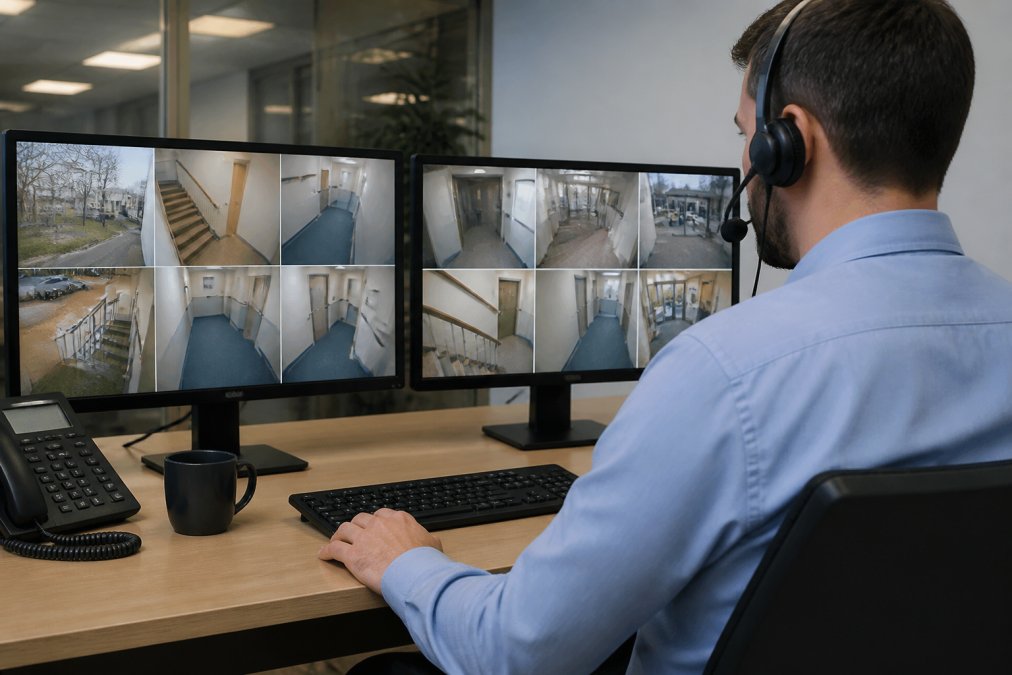
 comparison
Is Professional Security System Monitoring Worth It in 2026?
Table of Contents
- What Is Professional Security System Monitoring?
- Professional Monitoring vs. Self-Monitoring: An Honest Comparison
- The Hidden Cost of Monitored Security Systems
- How 24/7 Monitoring Centers Actually Respond
- DIY vs Professional Home Security: What Each Option Gets You
- The Role of AI-Enabled Surveillance Monitoring in Modern Systems
- False Alarms, Contracts, and Cybersecurity: What to Watch For
- Our Verdict: Is Professional Monitoring Worth It for You?
- Frequently Asked Questions
Last Updated: September 9, 2026
What Is Professional Security System Monitoring?
Professional security system monitoring is a subscription service where trained operators at a central station watch your property's alarm and sensor data around the clock, dispatching emergency responders when an intrusion, fire, or medical event is detected. The core question of whether professional security system monitoring is worth it comes down to what you value more: a monthly fee for guaranteed human response, or the lower cost of handling alerts yourself. At Mt. Major Tech, we provide advanced security integration services for residential estates and commercial facilities across Northern New England, and the answer is rarely as simple as the marketing suggests.
The value proposition hinges on one factor: what happens when you cannot respond. Most break-ins occur when homeowners are asleep, at work, or on vacation (bjs.gov). A self-monitored system sends a notification to your phone, but it cannot call the police for you. Professional monitoring bridges that gap with a direct line to dispatch, and for many property owners, that alone justifies the recurring expense.
Professional Monitoring vs. Self-Monitoring: An Honest Comparison
Self-monitoring means you pay for the hardware and receive alerts directly on your phone, handling every alarm event yourself. Professional monitoring routes those same signals to a central station where operators verify the threat and contact emergency services on your behalf. The tradeoff is straightforward: autonomy and lower cost versus guaranteed oversight.
| Monitoring Type | Monthly Cost | Response Action | Best For |
|---|---|---|---|
| Self-Monitoring | No subscription | You verify and call 911 | Budget-conscious, tech-savvy owners |
| Professional Monitoring | Subscription fee | Operator verifies and dispatches | Busy families, frequent travelers, businesses |
The gap becomes obvious during a genuine emergency. If you are in a meeting, driving, or asleep, a notification on your phone does nothing. A monitoring center operator, however, is actively watching your alarm panel and will escalate within seconds of an unacknowledged alert.
The Hidden Cost of Monitored Security Systems
Beyond the monthly subscription, monitored systems carry costs that first-time buyers often overlook. Hardware must be installed, whether through professional installation or a DIY kit, and equipment like sensors and cameras typically needs replacement after several years of service. Many providers also require a multi-year service agreement, which can lock you into a system you later want to change.
The cost of monitored security systems also includes indirect expenses. False alarms can trigger municipal fines in many jurisdictions, and repeated incidents may lead to response fees or even suspension of police service (usfa.fema.gov). These charges are separate from your monitoring bill and can add up quickly if your sensors are poorly placed or overly sensitive.
How 24/7 Monitoring Centers Actually Respond
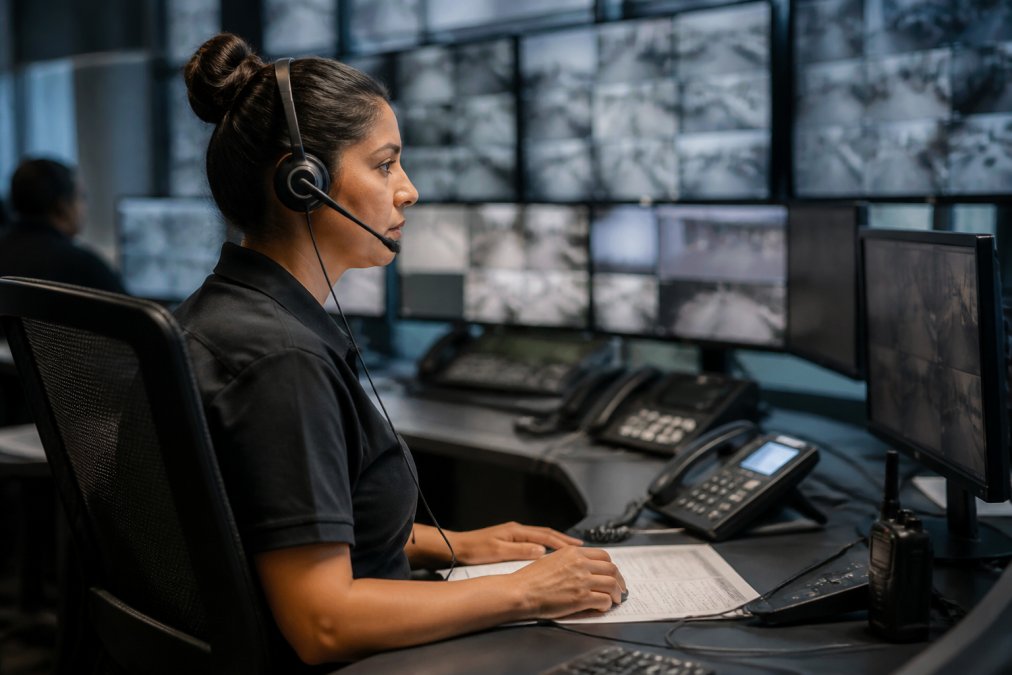
When an alarm triggers, the signal travels from your panel to the monitoring center, often via cellular backup to ensure the connection stays live even if your internet or phone lines are cut. An operator receives the alert with details about which sensor activated and your account's emergency contacts. The operator first attempts to reach you to confirm whether the alarm is genuine.
If you cannot be reached, or you confirm an emergency, the operator follows a dispatch protocol: contacting local police, fire, or medical services and relaying your address and the nature of the incident. This entire sequence typically unfolds within a minute or two. The value of 24/7 surveillance is not just the monitoring itself, but the redundancy built into the communication path, which is why cellular backup and system supervision are critical features to verify before purchasing.
DIY vs Professional Home Security: What Each Option Gets You
DIY security systems appeal to owners who want control over installation and no long-term contracts. These systems are typically wireless, easy to set up, and managed through a mobile app. You receive real-time notifications, can view camera feeds remotely, and often pay no monthly fee unless you add professional monitoring later.
The DIY vs professional home security decision depends on your tolerance for managing the system yourself. DIY requires you to handle firmware updates, battery replacements, and troubleshooting. Professional systems, by contrast, include ongoing maintenance and technical care, which matters if you lack the time or technical comfort to manage the hardware. For commercial properties or large estates, the scale of sensors, cameras, and access control points makes professional installation and oversight the more reliable path.
The Role of AI-Enabled Surveillance Monitoring in Modern Systems
AI-enabled surveillance monitoring represents the most significant shift in home and commercial security in recent years. Modern cameras use on-device processing to distinguish between a person walking toward your door and a stray animal crossing your yard. This reduces the false alarms that plague traditional motion sensors and improves the accuracy of the alerts you do receive.
For property owners weighing whether professional monitoring is worth it, AI adds a layer of intelligence that changes the cost-benefit calculation. Fewer false alarms mean fewer municipal fines and less strain on emergency response resources. Smart home integration also allows your security system to coordinate with lighting, locks, and environmental sensors, creating a unified response to threats. If a camera detects a break-in, the system can lock doors, turn on lights, and alert the monitoring center simultaneously.
False Alarms, Contracts, and Cybersecurity: What to Watch For
Three issues separate a good monitoring experience from a frustrating one, and the third is the one almost no review article covers.
False Alarm Protocols: The Fine Print That Costs You
False alarms are not just an annoyance; they are a financial liability. Municipalities across the country impose escalating fines for false dispatches, commonly $50 for the second offense in a year, $100 for the third, and $200 or more for subsequent incidents. Some cities require a $25 to $50 annual alarm permit, and a handful of jurisdictions suspend police response entirely after repeated false alarms.
The fix is a monitoring center with a robust verification protocol. Ask whether the center uses audio verification (listening through your panel's microphone), video verification (reviewing camera feeds before dispatch), or a simple call-first approach. Centers that dispatch on every unverified signal will generate fines for you. Centers that require visual or audio confirmation before dispatch will not.
Contracts: The Fine Print That Locks You In
Service agreements vary wildly between providers. The traditional model is a 36-month contract with early termination fees ranging from $200 to $500. These contracts often auto-renew at higher rates, and some include annual price escalators that increase your monthly fee by 3% to 5% each year.
Month-to-month plans cost $5 to $10 more per month but offer the freedom to switch providers if service degrades, prices rise, or you move. The contract vs. no-contract decision is not just about money, it is about whether you can vote with your wallet when a provider underperforms.
Cybersecurity: The Gap Most Buyers Ignore
A monitored security system is a computer on your home network, and every computer on your network is an attack surface. The cameras that protect your home can become entry points for attackers if the provider does not secure them properly. In recent years, researchers have demonstrated vulnerabilities in consumer cameras that allowed remote viewing of feeds, and botnets have weaponized insecure cameras to launch distributed denial-of-service attacks (nist.gov).
Choose a provider that encrypts all communications between your panel, cameras, and the cloud. Verify that firmware updates are automatic and regular, a camera that never updates is a camera with known vulnerabilities. And use strong, unique passwords for your security system account; do not reuse credentials from other services.
Privacy: What Happens to Your Footage
Cloud-based storage means your footage resides on a third-party server. That raises questions most buyers never ask: Who owns the recordings? How long does the provider retain them? Can law enforcement access them without a warrant? Does the provider use your footage to train AI models?
A monitored system that is secure against physical intruders but vulnerable to digital attackers has failed at its core mission. The best monitoring center in the world cannot protect you if an attacker can disable your cameras or access your footage remotely. Cybersecurity is not an add-on, it is a prerequisite.
Our Verdict: Is Professional Monitoring Worth It for You?
Professional monitoring is worth it for anyone who cannot guarantee they will be available to respond to an alert within minutes, at any hour, on any day. That includes most working families, frequent travelers, and all commercial operations. For a retiree who is home most of the time and comfortable managing a mobile app, self-monitoring may provide sufficient coverage at a lower cost.
The deciding factors are your lifestyle, your property's risk profile, and your tolerance for managing technology. If you value guaranteed emergency response, cellular backup, and professional oversight, the subscription cost is a reasonable premium for peace of mind. At Mt. Major Tech, we provide advanced security integration services for properties where an unmonitored alarm could mean the difference between a minor incident and a significant loss, and we design systems that integrate AI-enabled surveillance, smart access control, and reliable 24/7 oversight into a single, user-friendly platform.
Frequently Asked Questions
Is professional monitoring worth the monthly cost?
For most homeowners, professional monitoring is worth the cost because it ensures a human operator contacts emergency services when you cannot. The monthly subscription covers 24/7 surveillance and dispatch protocols. If you travel often, are away during work hours, or want a home insurance discount, professional monitoring provides value that self-monitoring cannot match. Weigh the monthly fee against the potential cost of a delayed emergency response.
How much should monthly security monitoring cost?
The cost of monitored security systems varies by provider, equipment, and contract length. The cost of monitored security systems varies by provider, equipment, and contract length. Pricing depends on features like cellular backup, smart home integration, and AI-enabled surveillance monitoring. No-contract plans often cost more per month. The best way to get an accurate price is to request a quote from a professional security integrator like Mt. Major Tech.
Does professional monitoring provide faster emergency response times?
Yes. Professional monitoring centers verify an alarm and dispatch police or fire services within seconds. A self-monitored system relies on you to see a notification and call 911, which adds delay and depends on your phone connectivity. In an emergency, those minutes matter. Professional monitoring also filters false alarms before dispatch, which helps you avoid fines from local municipalities for repeated false activations.
Can I integrate professional monitoring with my existing AI-enabled surveillance system?
In most cases, yes. Modern professional monitoring platforms can integrate with existing AI-enabled surveillance monitoring equipment, including cameras and smart sensors. The key is ensuring the monitoring center's software supports your hardware's communication protocols. A professional integrator can assess your current setup and bridge the gap between your cameras and a unified monitoring platform, so you do not have to replace working equipment.
What happens to my security system if I lose internet connectivity?
Professional monitoring systems use cellular backup to maintain a connection to the monitoring center when your internet goes down. This redundancy ensures your alarm signals still get through during an outage. Self-monitored systems that rely only on Wi-Fi lose remote access and notifications without internet. Before choosing a plan, confirm that it includes cellular backup, as this is a key reliability feature for 24/7 protection.
Choosing a security system is a decision about who you trust to act when you cannot. Professional monitoring provides a dedicated team for that moment, backed by cellular redundancy and verified dispatch protocols. Mt. Major Tech delivers this through AI-enabled surveillance, unified smart access control, and ongoing technical support tailored to your property. Book online to discuss a system built around your specific risks.