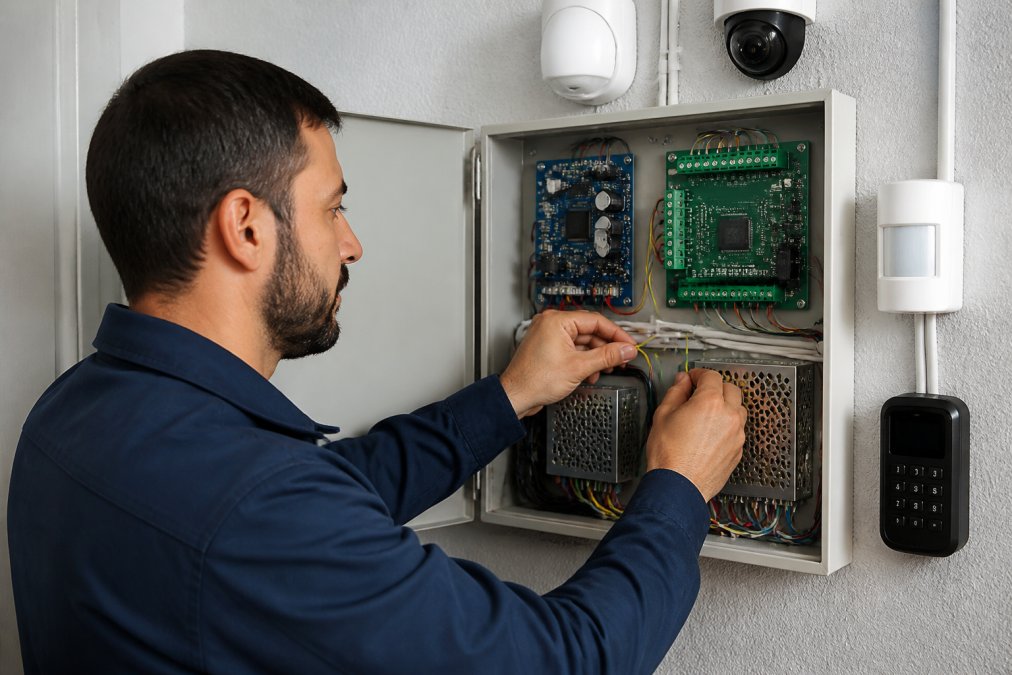
 how-to
How to Integrate Disparate Security Systems
Table of Contents
- What Is Security System Integration?
- Why Unified Security Matters: Benefits of Integration
- Challenges of Legacy Security System Integration
- How Long Does Unified Security Integration Take?
- Security System Integration Best Practices
- Cybersecurity and Compliance Considerations
- Frequently Asked Questions
Last Updated: August 29, 2026
What Is Security System Integration?
Security system integration is the process of connecting separate security technologies into a unified platform that operates as a single, cohesive system. Rather than managing cameras from one vendor, access control from another, and alarms from a third, integrated systems consolidate these functions into centralized management.
At Mt. Major Tech, we work with organizations that have inherited fragmented security infrastructures. The core challenge isn't that these individual systems don't work, it's that they don't communicate with each other. A breach detected by an intrusion detection system doesn't automatically trigger video surveillance in the right location. An access control system logs a suspicious entry pattern, but your security team doesn't see it until hours later. Integration solves this by creating real-time data synchronization across all components.
The technical foundation of integration relies on APIs, middleware, and unified command-and-control platforms that translate signals between disparate systems. This allows you to view all security events through a single interface, automate responses, and correlate incidents across multiple data sources. For organizations managing complex security infrastructure across multiple buildings or locations, this unified approach becomes essential for operational efficiency and threat response.
Why Unified Security Matters: Benefits of Integration
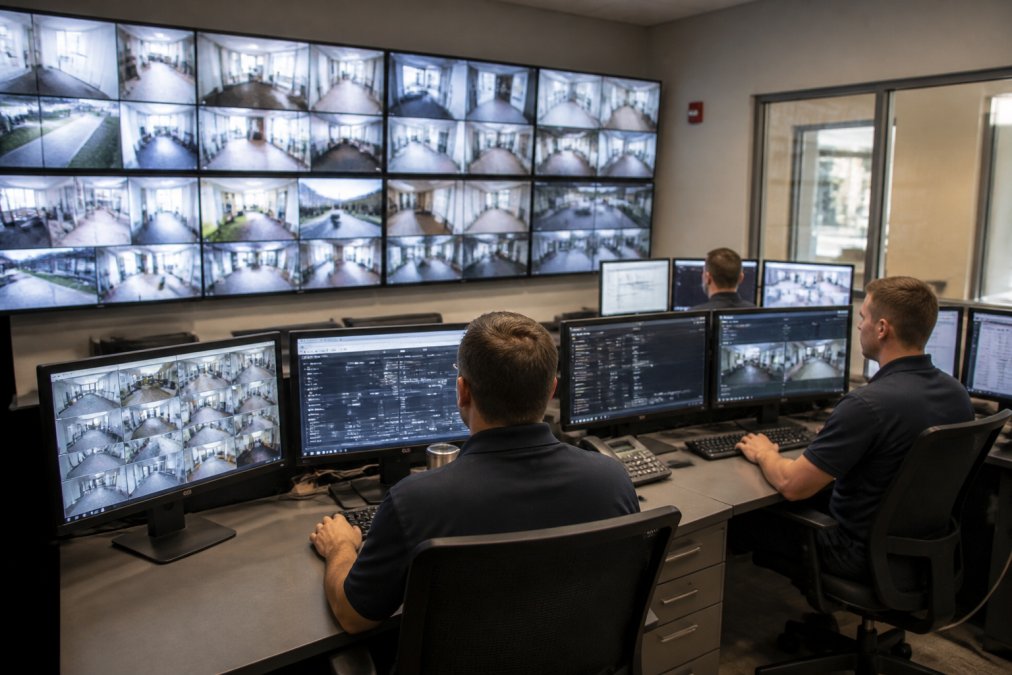
Integrating disparate security systems delivers immediate operational improvements. The most obvious benefit is eliminating manual workflows. Instead of checking three separate dashboards to understand what happened during a security incident, your team sees everything in one place. This reduces response time and the cognitive load on security personnel.
A unified platform also enables automated incident response. When motion is detected in a restricted area, the system can automatically trigger multiple actions: record high-resolution video from nearby cameras, lock doors in that zone, send alerts to security staff, and log the timestamp with full context. These workflows would be impossible with siloed systems because there's no way for one system to trigger actions in another.
Scalability improves dramatically with integration. Adding a new building to your security footprint becomes straightforward, you extend the unified architecture rather than deploying yet another standalone system. This also reduces long-term maintenance costs. Managing one integrated platform is cheaper than maintaining multiple vendor relationships, separate contracts, and incompatible hardware.
Compliance becomes measurable and auditable. Integrated systems maintain comprehensive logs of all security events with full context. When a regulator asks for evidence of your access control policies or surveillance coverage, you can pull unified reports showing exactly what happened and when. For healthcare providers managing HIPAA requirements or manufacturers handling sensitive processes, this audit trail is non-negotiable.
Challenges of Legacy Security System Integration
Most organizations don't start with integrated systems, they inherit them. You installed a camera system five years ago, added access control two years later, and now you're trying to connect an intrusion detection system. Each vendor used different protocols, different authentication methods, and different data formats.
The first challenge is hardware compatibility. Older cameras might use proprietary video codecs that modern integration platforms don't support. Legacy access control readers might communicate only through serial connections when everything else expects network-based communication. You can't simply plug these systems together and expect them to work.
The second challenge is API limitations. Not all security vendors expose APIs that allow external systems to read their data or trigger actions. Some vendors deliberately limit integration to protect their market position. You might find that the access control system can send data to your unified platform, but it can't receive commands back, making two-way automation impossible.
The third challenge is data format translation. A camera system might timestamp events in UTC, while your access control system uses local time. One system reports motion as a binary true/false, while another provides confidence percentages. Integration requires middleware that translates between these formats, and that middleware becomes another system to maintain.
Cost is a real constraint. Ripping out existing infrastructure and starting fresh with a modern integrated platform is expensive. Most organizations need to integrate what they have while gradually replacing legacy components. This creates a hybrid architecture where some systems are integrated while others remain partially siloed.
How Long Does Unified Security Integration Take?
Integration timelines depend on the complexity of your existing infrastructure and the scope of what you're connecting. A straightforward deployment connecting three systems in a single building typically takes 6-12 weeks from planning to full operation. This includes the audit phase, design, procurement, installation, testing, and staff training.
Larger deployments scale differently. An organization with 15 buildings, multiple vendors, and legacy systems that need partial replacement should expect 4-6 months for a complete integration project. The timeline isn't linear, the first building serves as a proof of concept, and subsequent buildings move faster because your team has learned the specific integration patterns.
The phased approach extends timelines but reduces risk. Many organizations choose to integrate one building or one security domain at a time, validating the approach before rolling out enterprise-wide. This staged deployment might take 8-12 months for a large campus, but it allows you to catch integration issues early and adjust your architecture before full commitment.
Planning and design consume the first 4-6 weeks, regardless of project size. This is where you audit existing systems, map API requirements, identify compatibility issues, and design the unified architecture. Rushing this phase causes expensive rework later. Installation and configuration typically take 2-4 weeks for straightforward deployments. Testing and validation require another 2-3 weeks, with additional time for staff training and documentation.
Security System Integration Best Practices
Step 1: Audit Your Current Infrastructure
Begin by documenting exactly what you have. Walk through each location and identify every camera, access control reader, alarm sensor, and intrusion detection device. Record the manufacturer, model, installation date, and current software version for each component. This audit reveals which systems are approaching end-of-life and which ones have years of useful service remaining.
Test connectivity and data access for each system. Can you extract video footage from your camera system? Does the access control system provide API documentation? Does your intrusion detection system support remote monitoring? These tests reveal which systems will integrate easily and which ones will require workarounds or replacement.
Document the current workflows your security team actually uses. How do they respond to an intrusion alert? Do they manually check multiple dashboards? Do they have to walk to a different room to see certain cameras? Understanding current pain points helps you design an integration that solves real problems rather than theoretical ones.
Step 2: Map API and Middleware Requirements
Most modern security platforms expose APIs, but the quality varies significantly. Some provide comprehensive read/write access to all functions, while others offer limited, read-only endpoints. Map what each system can expose and what you need from it.
Identify the middleware components you'll need. If your camera system uses RTSP streaming and your unified platform expects ONVIF, you need translation middleware. If your access control system runs on a local network with no cloud connectivity, you might need an edge gateway that bridges the on-premises system to your cloud-based unified platform.
Determine the data synchronization requirements. Does your unified platform need real-time updates from every sensor, or can some systems report on a schedule? Real-time integration demands more strong middleware and network bandwidth, while scheduled synchronization is simpler but introduces latency in incident response.
Step 3: Plan Your Unified Security Architecture
Design the architecture before you buy anything. Decide whether you'll use a cloud-based unified platform, an on-premises solution, or a hybrid approach. Cloud platforms offer scalability and accessibility but require reliable internet connectivity and trust in the vendor's security practices. On-premises solutions give you direct control but require more internal IT resources.
Define the network architecture. Will integrated systems communicate through your corporate network, or do they need isolated security networks? For healthcare facilities managing patient data, network isolation might be mandatory. For manufacturing operations, you might consolidate everything on a single secure network.
Plan for redundancy and failover. What happens if your unified platform loses connection to a camera system? Does the camera continue recording locally, or is that recording lost? A well-designed architecture includes local recording buffers, redundant network paths, and clear failover procedures.
Step 4: Execute Integration in Phases
Start with a single location or security domain. This pilot deployment lets you validate your architecture, identify integration issues, and train your team before rolling out enterprise-wide. Choose a location that's representative but not critical, you want to learn from this deployment without putting your most sensitive area at risk.
Implement one integration at a time rather than connecting everything simultaneously. Get cameras and video storage working first, then add access control, then intrusion detection. This approach isolates problems and makes troubleshooting easier.
Run parallel operations during the transition. Keep your old systems running while the integrated system operates alongside them. This provides a safety net if the new system has unexpected issues, and it lets you validate that the integrated system is capturing all the data you need.
Step 5: Test and Validate System Performance
Test incident response workflows end-to-end. Simulate a breach scenario and verify that the system detects it, logs it correctly, alerts the right people, and triggers automated responses as designed. Don't assume the system works because each component individually works, integration creates new failure modes.
Validate data accuracy across systems. Check that timestamps align, that video correlates with access control events, and that alert severity ratings are consistent. Discrepancies here indicate middleware configuration issues that need correction before full deployment.
Load test the unified platform. How many simultaneous video streams can it handle? What happens when all cameras try to record high-resolution footage at the same time? Test these scenarios before your security team depends on the system for actual threat detection.
Cybersecurity and Compliance Considerations

Integration creates a larger attack surface. When previously isolated systems connect through APIs and middleware, vulnerabilities in one system can potentially compromise others. A compromised camera system should not give an attacker access to your access control system. Design your integration with network segmentation that limits what each component can access.
Authentication and authorization become critical. Every system in your integration should require strong authentication, not default credentials or simple passwords. Implement role-based access control so that a security guard can view footage but can't change access control policies (nist.gov). For organizations handling sensitive data, multi-factor authentication should be mandatory for administrative access.
Data encryption is non-negotiable. Video footage and access logs contain sensitive information about your facility, your personnel, and your security procedures. Encrypt data in transit between systems and at rest in your storage. This applies to both cloud-based and on-premises deployments.
Compliance requirements vary by industry. Healthcare providers must ensure that integrated systems meet HIPAA requirements for data privacy and audit trails (hhs.gov). Manufacturing operations handling defense contracts need to comply with security standards that may require specific encryption protocols or air-gapped networks. Financial institutions have their own compliance frameworks. Understand what applies to your organization before designing the integration.
Vendor security practices matter. If you're using a cloud-based unified platform, review the vendor's security certifications, data handling policies, and incident response procedures. Ask for evidence of regular security audits. For organizations with strict compliance requirements, vendor transparency is essential.
Regular security updates are essential but create operational challenges. When a security vulnerability is discovered in one of your integrated systems, you need to patch it without disrupting your security operations. Plan update schedules carefully and test patches in your pilot environment before deploying them enterprise-wide.
Integrating disparate security systems is complex, but the operational benefits justify the effort. A unified approach to security gives your team visibility into what's happening across your entire facility in real time. When incidents occur, your team responds faster because they're not juggling multiple interfaces and separate data sources.
The integration process requires careful planning, starting with a thorough audit of what you have, mapping the technical requirements, designing a scalable architecture, and executing in phases with validation at each step. Mt. Major Tech specializes in exactly this kind of integration work, helping organizations in Northern New England consolidate fragmented security infrastructure into unified, AI-enabled platforms that actually work together. Our team handles the technical complexity so your security operations can focus on what matters: protecting your people and assets. Book Online to discuss your specific integration challenges with our security integration specialists.
Frequently Asked Questions
Can you integrate disparate security systems without replacing existing hardware?
Yes. Modern integration strategies use APIs, middleware, and unified management platforms to connect existing cameras, access control, and alarm systems without requiring complete replacement. The key is selecting hardware-agnostic middleware that can communicate with your current vendors' systems. This approach preserves your existing investment while creating centralized monitoring and control. Your integration partner should assess compatibility and recommend bridging technologies where needed.
How long does unified security integration take for a multi-building facility?
Timeline depends on system complexity, number of buildings, and integration scope. A typical multi-building integration takes 4-12 weeks from planning to full deployment. Initial assessment and design take 2-3 weeks, API configuration and middleware setup take another 2-4 weeks, and phased rollout across buildings adds 2-6 weeks. Facilities with legacy systems requiring custom connectors may extend to 12-16 weeks. Your integration partner should provide a detailed project timeline after the infrastructure audit.
What are the main challenges when integrating legacy security systems?
Legacy systems often lack modern APIs, use proprietary protocols, and have limited documentation. Common challenges include data incompatibility between vendors, siloed information that cannot sync in real-time, cybersecurity vulnerabilities in older hardware, and the complexity of maintaining uptime during integration. Additionally, legacy systems may not support cloud connectivity or modern authentication methods. A vendor-neutral integration strategy using middleware can bridge these gaps, but requires careful planning and testing to avoid service interruption.
What is the cost-benefit analysis for integrating disparate security systems?
Integration reduces operational costs by eliminating duplicate monitoring staff, automating incident response, and improving threat detection speed. Unified systems provide faster incident response, often 50-70% quicker than managing separate systems manually. Long-term savings come from streamlined maintenance, reduced false alarm response costs, and better asset protection. However, integration requires upfront investment in middleware, API development, and professional deployment. A cost-benefit analysis should compare your current annual operational costs against integration expenses and projected savings over 3-5 years.