 how-to
How to Hire a Security System Integrator in 2026
Table of Contents
- What a Security System Integrator Actually Does
- Unified Security Solutions for Residential Properties
- How to Hire a Security System Integrator: Step-by-Step
- Step 1: Define Your Security Requirements and Scope
- Step 2: Verify Certifications, Licensing, and 2026 Compliance Standards
- Step 3: Evaluate Technical Proficiency and Vendor-Neutral Capability
- Step 4: Assess AI-Driven Analytics and Smart Building Integration
- Step 5: Review Maintenance Plans and Ongoing Support
- Security Integrator Vetting Checklist for 2026
- Commercial Security System Installation Cost in 2026
- Questions to Ask Before Signing Any Contract
- Frequently Asked Questions
Last Updated: August 23, 2026
What a Security System Integrator Actually Does
A security system integrator is a specialized professional or firm that designs, installs, and manages multi-technology security infrastructure as a unified system rather than disconnected components. Most facilities struggling with security gaps aren't missing hardware, they're missing the connective layer that makes components work together.
At Mt. Major Tech, we see facilities running access control from one vendor, video surveillance from another, and intrusion detection from a third, with no unified platform tying them together. The result is operational inefficiency, blind spots, and response delays that hardware spending alone cannot fix.
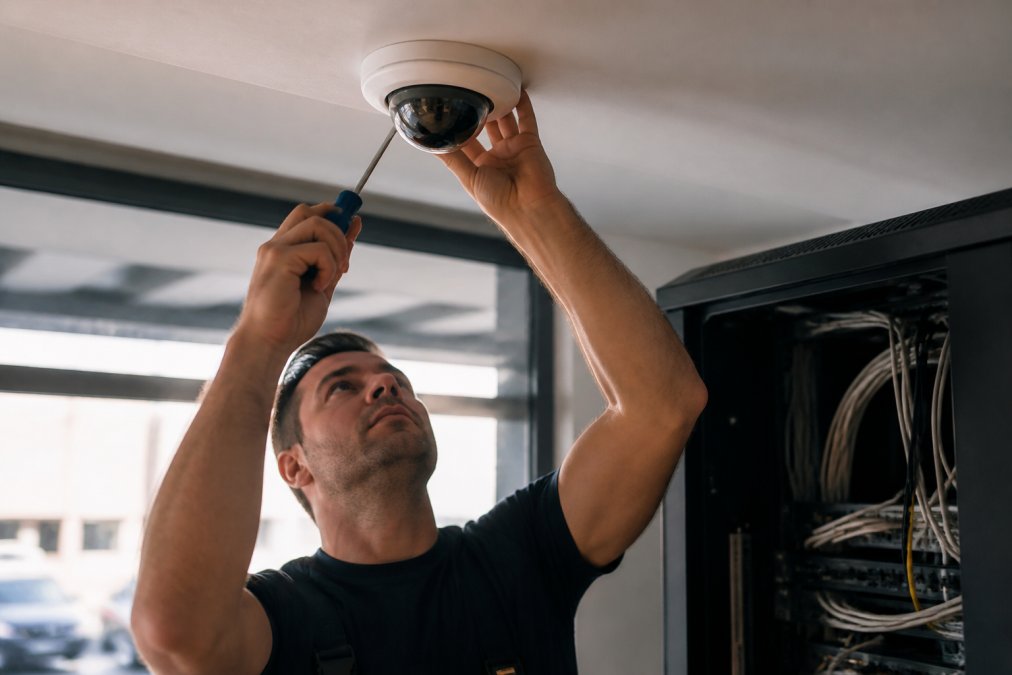
A qualified integrator conducts a full risk assessment, designs system architecture suited to your threat profile, handles procurement and low-voltage cabling, and commissions the entire system so it functions as intended from day one. Critically, they remain accountable for ongoing maintenance after installation.
Physical Security and Cybersecurity Convergence
The most significant shift in the integrator's role is the convergence of physical security and cybersecurity. These disciplines used to be managed separately, that separation is now a liability.
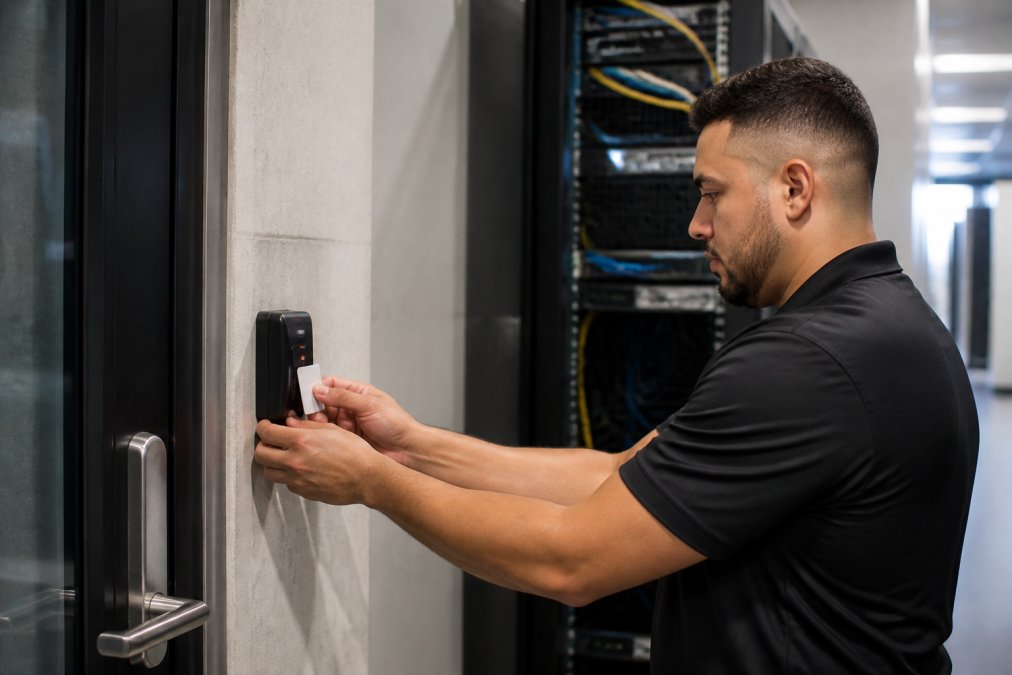
Modern access control systems, IP-based video surveillance, and cloud-based management platforms all run on network infrastructure. A door controller with a default password is a network vulnerability. A surveillance camera without end-to-end encryption is a data breach waiting to happen. According to guidance from the Cybersecurity and Infrastructure Security Agency, organizations should treat physical and cyber systems as an integrated risk surface.
A competent security system integrator understands both sides. They configure network security protocols alongside hardware installation, ensure API integration is properly secured, and advise on compliance requirements spanning both domains, including those relevant to HIPAA-covered entities and DoD contractors.
Key Services: From Risk Assessment to System Commissioning
The full scope of professional integration services typically includes:
- Risk assessment: Identifying vulnerabilities in current security infrastructure and threat environment
- System design: Engineering a bespoke solution fitted to facility layout, access patterns, and compliance requirements
- Hardware procurement: Sourcing cameras, biometric devices, intrusion sensors, and access control hardware
- Low-voltage cabling and network infrastructure: Installing the physical backbone connecting all components
- Software configuration: Setting up cloud-based management platforms, dashboards, and alert protocols
- System commissioning: End-to-end testing verifying every component performs to specification
- Emergency response protocol setup: Defining automated responses and human escalation paths
- Ongoing maintenance and support: Preventative maintenance, firmware updates, and incident response
Unified Security Solutions for Residential Properties
Unified security solutions for residential properties focus on delivering professional-grade protection within the operational realities of a private home or estate. For high-value residential properties, integration means combining video surveillance, smart access control, intrusion detection, and environmental monitoring into a single interface.
The homeowner should arm zones, review footage, grant temporary access, and receive alerts from one application, not four separate apps. Modern systems support remote monitoring from any device, automated responses to specific triggers, and scalability as the property grows. The key is ensuring interoperability between components from the design phase.
For estates with multiple structures, cloud-based management platforms allow all locations to be managed under a single unified security platform, with role-based access for family members, property managers, and security staff.
How to Hire a Security System Integrator: Step-by-Step
Hiring the wrong integrator is expensive in ways that don't show up immediately. Problems surface six months later when a system fails during an incident, compliance audits reveal configuration gaps, or the vendor is unreachable for support.
Step 1: Define Your Security Requirements and Scope
Before contacting any integrator, document your requirements with specificity. Your requirements document should cover:
- Facility type, square footage, and number of access points
- Number of buildings and whether distributed or centralized architecture is needed
- Specific compliance requirements (HIPAA, CMMC, state-level regulations)
- Current systems in place and whether integration or replacement is preferred
- Required capabilities: biometric authentication, video analytics, remote monitoring, intrusion detection
- Operational hours and staffing levels interacting with the system
- Budget parameters and timeline
This document becomes the basis for every proposal. Integrators who cannot respond with equal specificity are telling you something important about their capabilities.
Step 2: Verify Certifications, Licensing, and 2026 Compliance Standards
Licensing requirements vary by state, but most jurisdictions require licensure for alarm installation and low-voltage electrical work. Verify that any firm holds current licenses and carries appropriate liability insurance.
Look for industry certifications signaling technical proficiency. The Electronic Security Association's training and certification programs and the Security Industry Association provide recognized credentials indicating formal training and current standards knowledge.
For 2026, compliance standards have grown more demanding, particularly for facilities handling protected health information, government contracts, or critical infrastructure. Confirm that any integrator understands your specific compliance framework and can document how their proposed architecture addresses those requirements.
Step 3: Evaluate Technical Proficiency and Vendor-Neutral Capability
A common mistake is hiring an integrator who is effectively a reseller for one manufacturer's product line. These firms design systems around their inventory, not your requirements.
A genuinely vendor-neutral integrator evaluates hardware from multiple manufacturers and recommends components based on performance, interoperability, and scalability. Ask directly: "Which manufacturers do you work with, and are there any you won't use?" A defensive answer signals the firm is not vendor-neutral.
Technical proficiency also means integrating legacy systems. Replacing every component is rarely necessary or cost-effective. A skilled integrator assesses which existing hardware is worth retaining and designs an architecture incorporating it without compromising the unified platform.
Step 4: Assess AI-Driven Analytics and Smart Building Integration
AI-driven analytics are no longer optional for commercial facilities with serious security requirements. Traditional motion-triggered surveillance generates enormous footage volumes and frequent false alarms. AI-enabled systems analyze feeds in real time, distinguishing relevant events from background activity with far greater accuracy.
Ask any prospective integrator how they deploy AI-driven analytics, which platforms they use, and how those systems integrate with access control and intrusion detection. Smart building technology integration should also be discussed: modern facilities expect security systems to communicate with HVAC, lighting, and building management systems for coordinated emergency response.
Step 5: Review Maintenance Plans and Ongoing Support
System lifecycle management is where many integrators fall short. Installation is the visible, billable phase. Maintenance determines whether the system performs when needed.
Ask for specifics of any maintenance plan:
- What does preventative maintenance include, and how frequently is it performed?
- What is the response time commitment for system failures?
- Are firmware and software updates included, and who manages them?
- What happens if a key component reaches end-of-life during the contract period?
- Is remote monitoring available, and what triggers a human response?
A firm that cannot answer these questions in detail has not thought seriously about lifecycle management.
Security Integrator Vetting Checklist for 2026
Use this checklist when evaluating any security system integrator before signing a contract.
| Vetting Criterion | What to Verify | Why It Matters |
|---|---|---|
| State licensing | Current license for alarm and low-voltage work | Legal requirement; liability protection |
| Insurance coverage | General liability + errors and omissions | Protects you if installation causes damage |
| Industry certifications | ESA, SIA, or manufacturer-specific credentials | Signals ongoing technical training |
| Vendor neutrality | Can specify hardware from multiple manufacturers | Ensures system designed for your needs |
| Compliance experience | Familiarity with your specific regulatory framework | Critical for HIPAA, CMMC, and similar requirements |
| AI analytics capability | Demonstrated deployment, not just product resale | Separates genuine integrators from resellers |
| Maintenance plan | Written SLA with response time commitments | Ensures accountability post-installation |
| References | Verifiable clients in similar facility types | Confirms relevant experience |
| Project management | Named project manager and communication protocol | Prevents scope creep and delays |
| Contractual clarity | Clear deliverables, milestones, and warranty terms | Protects both parties |
Contractual Red Flags to Watch For
These warning signs should stop any negotiation:
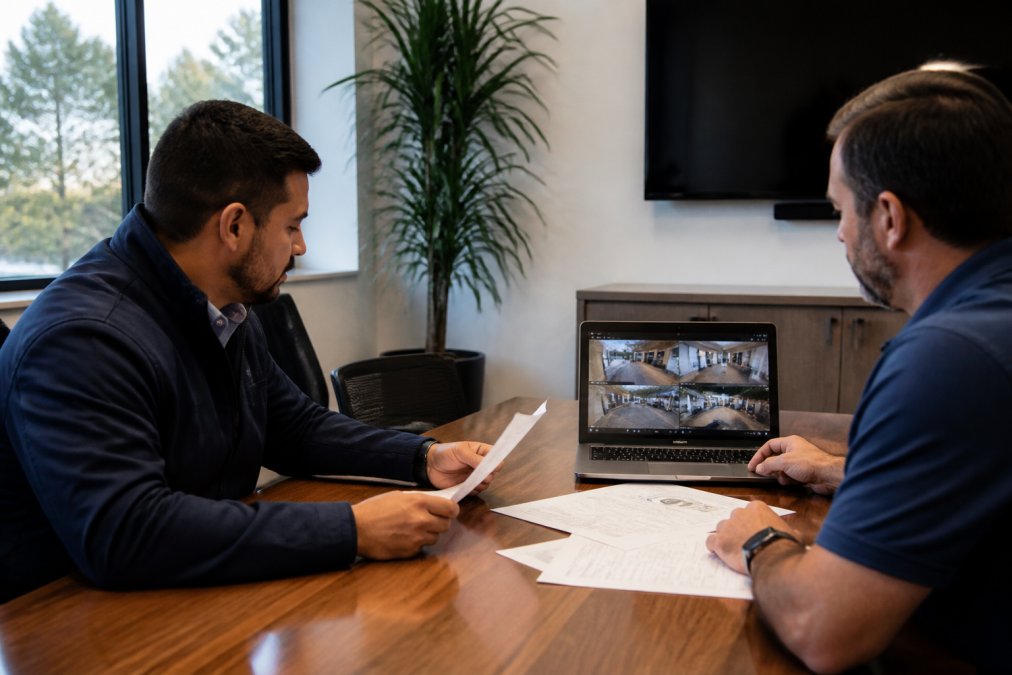
- No defined scope of work: If the contract does not specify exactly which components will be installed and commissioned, you have no recourse when deliverables fall short.
- Proprietary lock-in clauses: Some integrators restrict your ability to use other service providers for maintenance or expansion, creating significant long-term liability.
- Vague warranty terms: "We stand behind our work" is not a warranty. Look for specific coverage periods and what voids coverage.
- No SLA for support response: Without a written service level agreement, there is no obligation to respond to failures within any timeframe.
- Automatic renewal with penalty clauses: Multi-year contracts that auto-renew with steep cancellation fees are common. Understand exit terms before signing.
- Exclusion of third-party hardware: If the contract restricts the integrator to their preferred hardware even when alternatives would better serve your requirements, system design is driven by their margin, not your security.
According to the Federal Trade Commission's guidance on service contracts, you have the right to understand all contract terms before signing. If an integrator pressures you to sign quickly or discourages careful review, that behavior is itself a red flag.
Commercial Security System Installation Cost in 2026
Pricing for commercial security system installation varies substantially based on facility size, system complexity, number of access points, and integration level required. Most projects involve three cost categories: hardware procurement, installation labor (including low-voltage cabling and commissioning), and ongoing service agreements for maintenance and monitoring.
For facilities with existing infrastructure, integration projects are typically less expensive than full replacements. For facilities starting from scratch or requiring significant upgrades to meet 2026 compliance standards, the scope is broader and costs reflect that.
The Security Industry Association's industry research provides benchmarking data on commercial security spending that can help frame reasonable expectations for your facility type. For specific pricing relevant to your project, contact Mt. Major Tech directly for a scoped assessment and proposal.
Questions to Ask Before Signing Any Contract
- Can you show me a completed project similar to my facility type? Ask for references you can contact directly.
- Who will be my primary point of contact during installation, and who do I call for support after? Personnel continuity matters.
- How do you handle a situation where a component fails within the first year? The answer reveals how they think about accountability.
- What compliance standards have you designed systems for, and can you provide documentation? Relevant for any regulated industry.
- How does your AI analytics platform handle false alarm reduction in environments similar to mine? Push for specifics on what triggers alerts versus what gets filtered.
- What happens to my system access if I decide not to renew your service contract? This surfaces proprietary lock-in before it becomes a problem.
- How do you manage cloud-based storage redundancy? Ask specifically about local backup options and outage procedures.
- What is your process for system updates and how are they communicated? Firmware updates on security hardware can introduce vulnerabilities if mismanaged.
As documented in NIST's cybersecurity framework for critical infrastructure, continuous monitoring and maintenance are foundational to a resilient security posture. An integrator who cannot articulate a clear update and maintenance protocol is not aligned with current best practice.
Security integration done poorly creates a false sense of protection. The cameras are on, badge readers work, and the alarm panel shows green, but the system isn't unified, AI analytics aren't tuned, and no one has a clear support contact when something fails at 2 a.m. Mt. Major Tech delivers AI-enabled surveillance, smart access control, and intrusion defense as a genuinely integrated system with ongoing technical support. If you're evaluating integrators for a residential estate, commercial facility, or compliance-sensitive environment, book a consultation with our team and get a scoped assessment built around your actual requirements.
Frequently Asked Questions
What does a security system integrator do?
A security system integrator designs, installs, and manages unified security platforms that combine access control systems, video surveillance, intrusion detection, and network security into a single, cohesive infrastructure. Rather than deploying isolated products, an integrator ensures all components communicate with each other, handles low-voltage cabling, configures API integrations, and provides ongoing system lifecycle management so your security infrastructure stays effective over time.
What certifications should a professional security integrator hold?
Look for integrators holding credentials from recognized industry bodies such as ESA (Electronic Security Association) licensing, NICET certifications for fire and life safety, and manufacturer-specific training credentials for the platforms they install. For commercial facilities with compliance requirements, confirm the integrator understands relevant federal standards, such as HIPAA technical safeguards for healthcare environments or CMMC requirements for DoD contractors. State-level low-voltage contractor licensing is also mandatory in most states.
Should I hire a local security integrator or a national firm?
Local integrators typically offer faster on-site response times, deeper familiarity with regional compliance requirements, and more accountable ongoing support relationships. National firms may carry broader vendor relationships but often subcontract local installations, which can create gaps in accountability. For properties requiring consistent preventative maintenance and rapid emergency response, a local or regional security system integrator with dedicated technicians generally delivers more reliable service continuity.
How much does it cost to hire a security system integrator in 2026?
Commercial security system installation cost in 2026 varies significantly based on facility size, system complexity, the number of access control points, camera count, and whether AI-driven analytics or cloud-based management are included. Residential estate projects carry different cost profiles than multi-building campus deployments. Because pricing depends on your specific scope, the most accurate approach is to request a detailed site assessment and itemized proposal directly from your integrator before committing to any contract.