 ultimate-guide
AI Surveillance Systems for Manufacturing: A 2026 Guide
Table of Contents
- What AI Surveillance Systems Do in Manufacturing
- Real-Time Defect Detection and Quality Assurance
- Benefits of AI Video Analytics in Manufacturing
- Workplace Safety, PPE Compliance, and Incident Response
- AI Surveillance Compliance and Privacy Regulations
- Integrating AI Cameras with Existing Security Infrastructure
- ROI and Total Cost of Ownership for AI Surveillance
- Frequently Asked Questions
Last Updated: August 26, 2026
What AI Surveillance Systems Do in Manufacturing
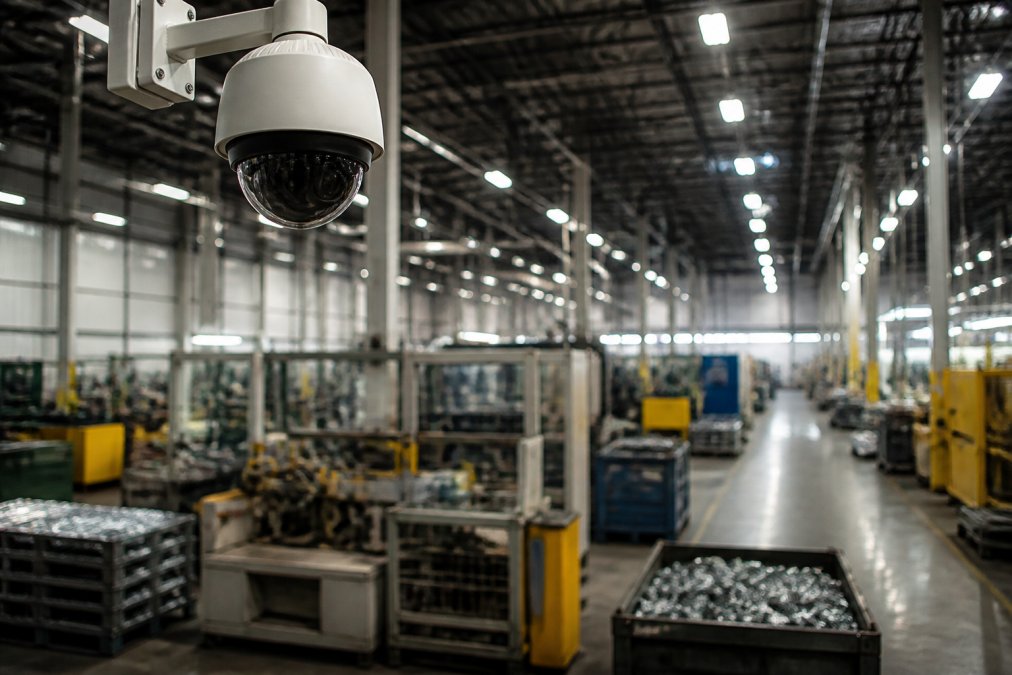
AI surveillance systems for manufacturing combine computer vision, real-time monitoring, and deep learning to transform raw video feeds into actionable intelligence. Unlike traditional security cameras that simply record footage, these systems actively analyze what's happening on your production floor, assembly lines, and facility perimeter in real time.
The core function is straightforward: deploy AI-powered cameras throughout your facility, and the system identifies defects, safety violations, security breaches, and operational inefficiencies as they occur. The difference between passive recording and active surveillance becomes clear when a system catches a quality issue before 500 defective units leave the line, or detects a PPE compliance violation before someone gets hurt.
At Mt. Major Tech, we provide advanced security integration services that help manufacturing operations transform their approach to safety and quality by moving from reactive incident response to proactive threat detection. The technology works because it doesn't get tired, doesn't miss details, and doesn't require human eyes on every camera feed simultaneously. Machine vision algorithms process thousands of data points per second, flagging anomalies that would take a security team hours to spot manually.
The real value emerges when you integrate these systems across your entire operation. A unified platform connects cameras monitoring assembly lines, warehouse operations, facility entrances, and equipment zones into a single intelligence layer. That integration is what separates genuinely useful AI surveillance from expensive camera arrays that sit disconnected and underutilized.
Real-Time Defect Detection and Quality Assurance
Automated inspection powered by AI surveillance systems for manufacturing catches product defects at the exact moment they occur. Rather than discovering problems during final quality checks or after products reach customers, your production line identifies issues in real time and halts the process before waste compounds.
The technical mechanism relies on neural networks trained to recognize acceptable versus defective products. Your system learns what a quality part looks like, then compares every unit passing through the line against that standard. Surface cracks, misalignment, missing components, color inconsistencies, and assembly errors trigger immediate alerts. Production staff receive notifications instantly, not after a batch has already been compromised.
Consider a common scenario: a stamping operation produces 200 parts per hour. A traditional quality control approach inspects samples at intervals, missing defects that occur between inspection points. An AI surveillance system examines every single part in real time. If a die begins wearing and produces slightly undersized components, the system catches it on unit three, not unit 147.
This capability directly impacts your bottom line. Scrap reduction alone justifies the investment for many manufacturers. When you eliminate defective units before they consume additional labor, materials, and processing, your cost per good unit drops significantly. Beyond scrap, you avoid the far larger cost of recalls, warranty claims, and reputation damage that come from defective products reaching customers.
The system also learns and improves. As it processes thousands of images, it becomes better at distinguishing between acceptable variation and genuine defects. Your quality thresholds become more consistent than human inspectors can maintain over an eight-hour shift.
Benefits of AI Video Analytics in Manufacturing
The benefits of AI video analytics in manufacturing extend far beyond catching defects. A comprehensive AI surveillance system improves operational throughput, reduces incident response times, enhances compliance documentation, and provides data-driven insights into how your facility actually operates.
Operational efficiency gains emerge when you analyze footage to identify bottlenecks. Video analytics reveals where products slow down, where workers spend time waiting for equipment, and where layout changes could improve flow. One manufacturer discovered that their assembly line had an undocumented five-minute pause every 90 minutes because of how workstations were arranged. Fixing that single layout issue improved daily throughput by 8 percent (peer-reviewed research).
Predictive maintenance becomes possible when AI surveillance monitors equipment condition continuously. Visual signs of wear, vibration patterns visible on camera, and unusual operational behavior trigger maintenance alerts before equipment fails. This approach prevents the catastrophic downtime that comes from unexpected breakdowns.
Scalability is built in. Whether your facility spans one building or ten, a cloud-based AI surveillance system grows with you. Add cameras to new areas, and the system immediately applies the same intelligence without requiring new infrastructure or retraining.
Compliance documentation transforms from manual record-keeping to automatic evidence. When regulators ask whether your facility maintained safety protocols, you have timestamped video evidence. When insurance companies investigate an incident, you have objective footage, not conflicting witness statements.
Workforce insights emerge when you analyze how people actually work. Video analytics shows which training approaches stick, which procedures get shortcuts, and where safety culture needs reinforcement. This data-driven approach to workforce development beats guesswork.
The unified approach that Mt. Major Tech advocates combines these benefits into a single system. Rather than maintaining separate tools for quality, safety, maintenance, and compliance, one integrated platform delivers all of them. That consolidation reduces complexity, lowers total cost of ownership, and ensures your data tells a consistent story about facility performance.
Workplace Safety, PPE Compliance, and Incident Response
Workplace safety monitoring through AI surveillance systems for manufacturing detects PPE violations, unsafe behaviors, and hazardous conditions before incidents occur. The system watches for workers entering restricted areas without proper equipment, identifies unsafe work practices, and alerts supervisors to dangerous situations in real time.
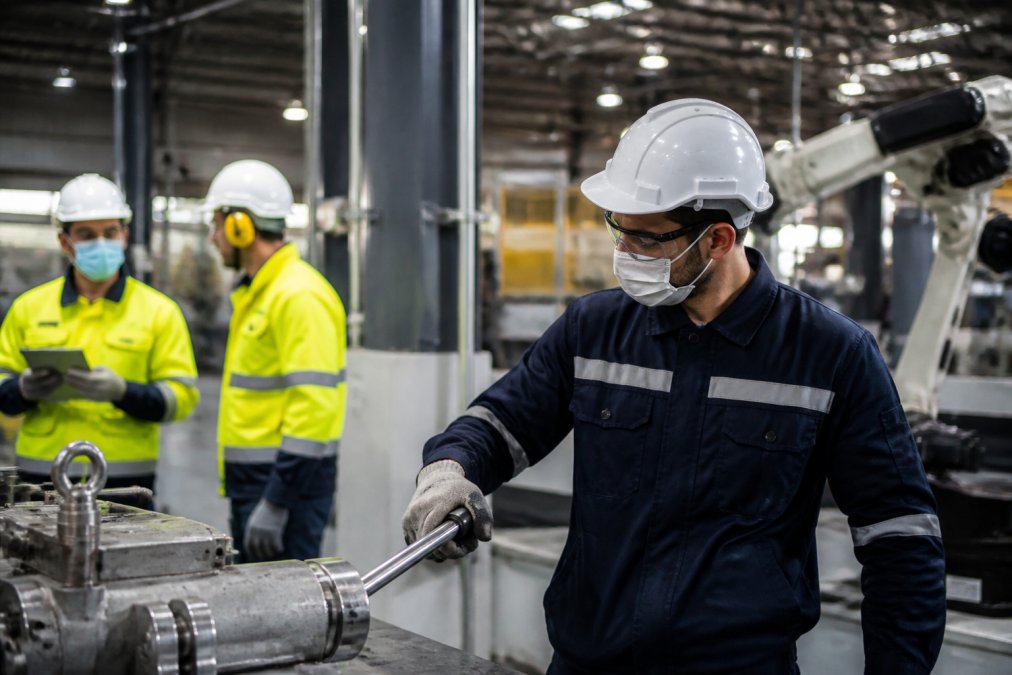
PPE compliance monitoring is particularly valuable. The system recognizes when workers are not wearing required protective equipment and flags those instances immediately. In industries where head injuries or chemical exposure pose real risks, this continuous monitoring prevents the complacency that leads to accidents. A worker might skip their hard hat for a quick trip across the floor, but an AI system catches it every time.
Incident response improves dramatically with AI surveillance. When an accident occurs, you have precise video evidence of exactly what happened, when it happened, and what preceded it. This information is invaluable for investigations, insurance claims, and preventing recurrence. More importantly, the system often prevents incidents by detecting dangerous situations before they result in injury.
The system also monitors environmental hazards. Spills, blocked emergency exits, unsecured materials, and other conditions that create accident risk trigger alerts. Your safety team responds to actual hazards rather than discovering them during rounds.
Incident response protocols become faster and more effective. When the system detects a fall, chemical exposure, or equipment malfunction, it immediately notifies relevant personnel with precise location information. Response time drops from minutes to seconds in many cases.
AI Surveillance Compliance and Privacy Regulations
Implementing AI surveillance systems for manufacturing requires understanding your legal obligations around data privacy, employee monitoring, and security compliance. The regulatory landscape varies by industry, but several principles apply broadly.
The primary concern is employee privacy. Most jurisdictions allow workplace monitoring, but with important restrictions. You must inform employees that surveillance is occurring, you cannot monitor in areas where privacy is expected (bathrooms, break rooms, changing areas), and you must store footage securely with limited access.
OSHA regulations require documentation of workplace safety measures, and AI surveillance provides that documentation automatically. When regulators inspect your facility, you can demonstrate that safety protocols were enforced consistently. This compliance advantage is significant, particularly for high-risk manufacturing environments.
Data security becomes critical when you're storing video footage. Footage contains sensitive information about your operations, your workforce, and potentially customer data visible in the facility. Your system must encrypt data in transit and at rest, limit access to authorized personnel only, and maintain audit logs of who accessed footage and when.
Industry-specific regulations may apply. Healthcare manufacturers must comply with HIPAA if any patient data appears in footage. Defense contractors must meet NIST cybersecurity standards. Food manufacturers have FDA requirements around facility monitoring. Understanding your specific regulatory environment is essential before deployment.
The GDPR-equivalent consideration in the United States involves reasonable expectations of privacy. Surveillance of production areas is generally acceptable. Surveillance of offices, meeting rooms, or administrative areas requires stronger justification and clearer notice to employees.
Mt. Major Tech's approach incorporates compliance from the ground up. Our systems are designed to meet common regulatory requirements across manufacturing, with flexibility to adapt to your specific industry's rules. We can assist with documentation of your surveillance policies, access controls, and data retention practices, which simplifies regulatory audits and demonstrates good faith compliance efforts.
Integrating AI Cameras with Existing Security Infrastructure
Most manufacturing facilities already have security systems in place: older cameras, access control systems, alarm systems, and perhaps some network infrastructure. The question isn't whether to start from scratch, but how to integrate new AI surveillance systems for manufacturing with what you already have.
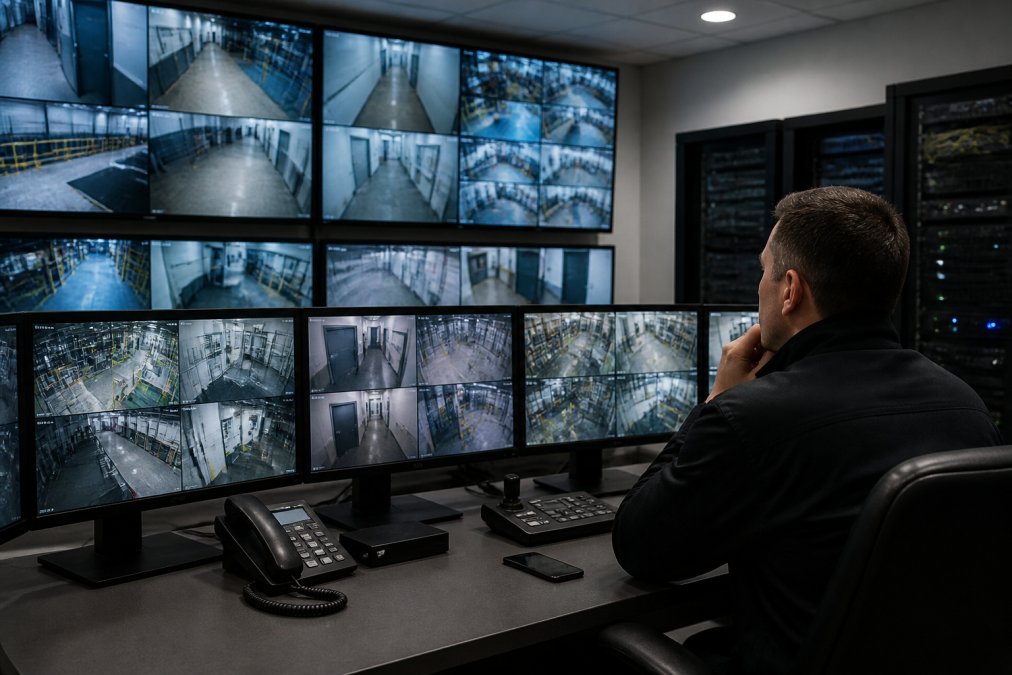
Integration typically happens in layers. Your existing cameras may not have AI capabilities, but they can coexist with new AI-enabled cameras. The new cameras handle intelligent analysis while legacy cameras continue providing basic recording. Over time, you can upgrade legacy equipment as budgets allow.
Network infrastructure is the crucial consideration. AI surveillance systems require significant bandwidth and processing power. Your existing network may need upgrades to handle the data flow from multiple high-resolution AI cameras. This isn't a barrier, most modern facilities have adequate network capacity, but it requires assessment during planning.
Access control integration is where real value emerges. When your AI surveillance system connects to your access control system, it creates a unified security picture. The system sees who entered a restricted area (access control data) and what they did there (video analytics). This combination is far more powerful than either system alone.
Edge computing versus cloud processing affects integration strategy. Edge computing processes video locally on the camera or a local server, reducing bandwidth requirements and latency. Cloud processing centralizes intelligence, making it easier to maintain and scale. Most effective deployments use hybrid approaches: edge processing for immediate alerts and local response, cloud processing for long-term analysis and facility-wide patterns.
The integration roadmap matters. Rather than trying to replace everything simultaneously, a phased approach reduces disruption and risk. Start with your highest-priority areas, perhaps your most valuable production line or your facility perimeter, then expand systematically. This approach lets you refine processes, train staff, and demonstrate ROI before committing to full-facility deployment.
Mt. Major Tech specializes in exactly this integration challenge. We assess your existing infrastructure, identify what can be used and what needs replacement, and design a deployment that minimizes disruption while maximizing capability. Our team handles the technical integration, so your staff can focus on operations rather than wrestling with incompatible systems.
ROI and Total Cost of Ownership for AI Surveillance
Understanding the financial case for AI surveillance systems for manufacturing requires looking beyond the equipment cost to total cost of ownership and measurable returns over time.
The direct costs include cameras, processing hardware, software licenses, installation labor, and ongoing maintenance. These are straightforward to calculate. The indirect costs, network upgrades, staff training, integration labor, are often underestimated but essential to account for accurately.
The returns are where the analysis becomes interesting. Defect reduction directly impacts cost of goods sold. If your current scrap rate is 3 percent and AI surveillance reduces it to 1 percent, calculate that savings across your annual production volume (sme.org). For a mid-sized manufacturer, this single benefit often exceeds the system cost within 18 months.
Productivity gains emerge from reduced downtime. When predictive maintenance prevents unexpected equipment failures, your production schedule stays on track. When layout optimization (discovered through video analytics) improves throughput, you produce more with the same labor. These gains compound over time.
Safety improvements reduce workers' compensation insurance costs, OSHA fines, and litigation exposure. A single serious injury can cost hundreds of thousands of dollars. Preventing even one incident pays for significant surveillance investment.
Compliance efficiency matters for heavily regulated manufacturers. The time your compliance team spends manually documenting safety practices, maintaining audit trails, and responding to regulatory inquiries drops substantially when video evidence is automatically collected and organized.
The typical payback period for comprehensive AI surveillance in manufacturing ranges from 18 to 36 months, depending on your facility size, current inefficiencies, and industry (nist.gov). Beyond that point, the system operates at very low marginal cost, mostly software licenses and maintenance, while continuing to deliver value.
When evaluating ROI, be specific about baseline metrics. Measure your current defect rate, downtime frequency, safety incident rate, and compliance audit time before deployment. After implementation, track the same metrics. This data-driven approach to justifying the investment beats abstract arguments about "better security."
AI surveillance systems for manufacturing represent a fundamental shift in how facilities approach quality, safety, and operational intelligence. The technology has matured from experimental to proven, and the competitive advantage goes to manufacturers who deploy it effectively. The challenge isn't whether to implement these systems, it's how to integrate them into your existing operations without disruption.
Mt. Major Tech helps manufacturing operations navigate that challenge. Our team designs AI surveillance systems tailored to your specific facility, integrates them with your existing infrastructure, and provides ongoing technical support to ensure your system delivers consistent value. We focus on the practical outcomes that matter: fewer defects, safer operations, better compliance, and measurable ROI. If you're ready to move beyond reactive security toward proactive facility intelligence, Book Online to discuss how AI surveillance can work for your operation.
Frequently Asked Questions
How do AI surveillance systems reduce false alarms in manufacturing?
AI surveillance systems use deep learning and computer vision to distinguish between genuine security threats and routine operational activity. Instead of triggering on any motion, machine vision algorithms analyze patterns, object types, and behavioral context. A falling tool or shifting inventory registers differently than an unauthorized person or perimeter breach. This reduces alert fatigue on security teams and prevents costly false alarm responses, allowing staff to focus on genuine incidents that require action.
Can AI surveillance systems integrate with existing security infrastructure?
Yes. AI cameras can work alongside legacy systems through API integration and unified management platforms. Rather than replacing cameras from one vendor, access control from another, and alarms from a third, modern AI surveillance solutions act as an overlay that connects disparate systems into a single interface. This approach preserves your current investment while adding real-time analytics, object identification, and automated incident response. Integration complexity depends on your existing hardware, but most facilities can avoid a complete system replacement.
What compliance standards apply to AI surveillance in manufacturing?
Manufacturing facilities must comply with OSHA workplace safety regulations, which increasingly recognize video analytics as a tool for hazard detection and incident documentation. If your facility handles sensitive data or operates under government contracts, you may need to meet NIST cybersecurity standards and data protection requirements. Healthcare and pharmaceutical manufacturers must address HIPAA or FDA regulations. State privacy laws may also apply to employee monitoring. A security partner familiar with your specific industry can ensure your AI surveillance system meets all applicable compliance requirements.
What is the typical ROI timeline for AI surveillance systems in manufacturing?
ROI depends on your current losses from downtime, quality defects, and safety incidents. Facilities that implement real-time defect detection often see reduced scrap rates within 3-6 months. Improved incident response and hazard detection lower insurance claims and workers' compensation costs over time. Edge computing deployments reduce cloud bandwidth costs immediately. Many manufacturers report payback within 12-18 months when combining reduced downtime, fewer false alarms, and improved throughput. Exact timelines vary based on facility size, existing infrastructure, and deployment scope. Request a customized ROI analysis for your operation.