 listicle
Smart Access Control System Pricing: 2026 Guide
Table of Contents
- Smart Access Control System Pricing: What You Need to Know
- Access Control Hardware vs Software Costs
- Access Control Hardware vs Software Pricing Models
- Commercial Access Control Installation Services and Labor
- Cloud-Based Access Control Subscription Pricing Models
- Total Cost of Ownership Over Five Years
- Integration Costs and System Scalability
- Conclusion
- Frequently Asked Questions
Last Updated: August 27, 2026
Smart Access Control System Pricing: What You Need to Know
Understanding smart access control system pricing requires looking beyond sticker prices. The total investment spans hardware, software, installation labor, and ongoing subscription fees, varying dramatically based on facility size, complexity, and integration needs. At Mt. Major Tech, we've helped facility managers navigate this landscape by breaking down the real expenses that determine whether a system fits your budget.
Most organizations underestimate total cost of ownership by focusing only on initial hardware purchase. A comprehensive system requires physical components, cloud infrastructure, professional installation, and continuous maintenance. Decisions in each category compound over time, turning seemingly affordable entry-level systems into significant operational expenses, or finding solutions that deliver real value for years.
This guide covers the pricing structure behind modern smart access control systems, helping you understand what drives costs and how to evaluate genuine value for your facility's security needs.
Access Control Hardware vs Software Costs
Hardware and software represent fundamentally different cost structures critical for budgeting.
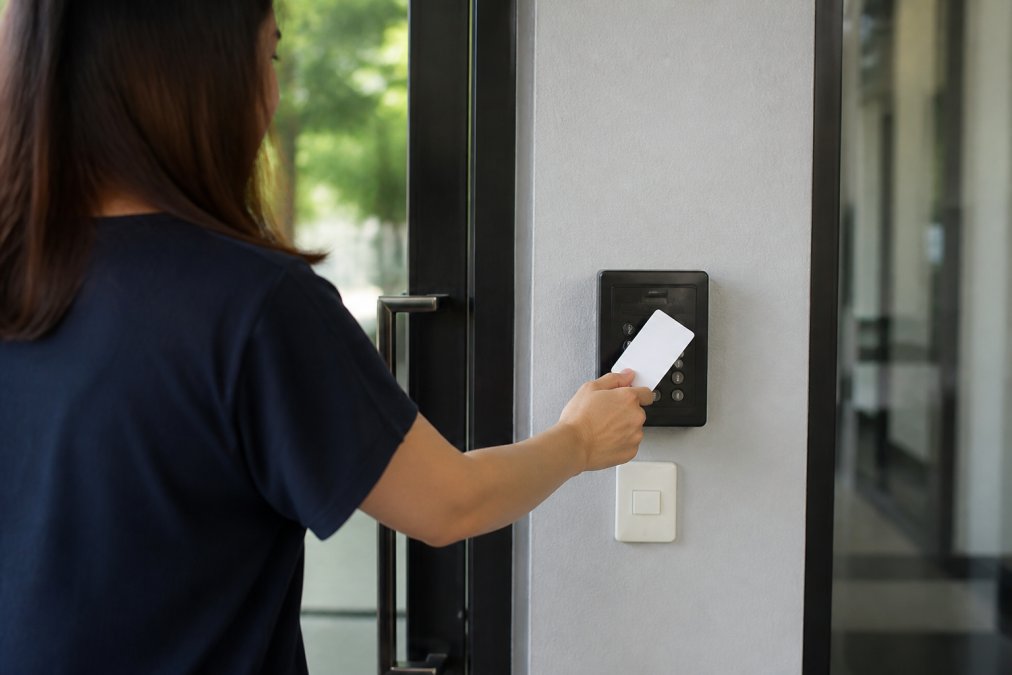
Physical hardware includes credential readers, magnetic locks, electric strikes, keypads, and server infrastructure. These tangible assets carry one-time purchase costs. Credential readers range from basic to advanced biometric models. Magnetic locks and electric strikes vary by fail-safe or fail-secure operation requirements. Server hardware for on-premise systems adds expense, while cloud-based systems eliminate this capital cost entirely.
Software costs operate differently. Cloud-based systems typically charge monthly subscription fees per door, per user, or per facility, spreading costs over time but creating ongoing operational expenses. On-premise software requires one-time license purchase but demands maintenance, updates, and IT resources. The software layer handles user management, access policies, audit trails, and real-time monitoring, capabilities directly impacting security posture.
The key tension: cheaper hardware often pairs with expensive software, while premium hardware may include more generous software licensing. Over the first five years, the hardware-software split typically runs approximately 40-60 in favor of software and services, making total cost of ownership analysis more important than comparing hardware prices alone.
Access Control Hardware vs Software Pricing Models
When evaluating smart access control system pricing, you're choosing between two distinct purchasing models.
Hardware-centric pricing loads costs upfront. You purchase readers, locks, controllers, and server equipment outright. Installation labor is substantial, requiring electricians and security technicians. Once installed, monthly costs drop significantly, mainly maintenance and occasional replacements. This model suits organizations with stable facility layouts and long-term platform commitment.
Software-centric pricing (cloud-based systems) reverses this structure. Initial hardware investment is minimal because the system uses cloud infrastructure you don't own. Monthly subscription fees per door or per user accumulate over time. A facility with 50 doors paying $30 per door per month generates $18,000 in annual software costs alone (the CDC). Over five years, that's $90,000 in recurring charges, plus integration or professional services fees.
The crossover point varies by facility size. Small facilities (under 20 doors) often find cloud-based systems more economical because subscription costs stay manageable and eliminate expensive server maintenance. Large facilities (100+ doors across multiple buildings) sometimes find on-premise systems more cost-effective if they can absorb upfront capital investment and IT overhead.
Many organizations choose hybrid approaches: cloud-based management with local hardware redundancy. This adds complexity to pricing but provides resilience if cloud connection drops.
Commercial Access Control Installation Services and Labor
Installation labor represents one of the largest variable costs in access control system pricing, often surprising facility managers.
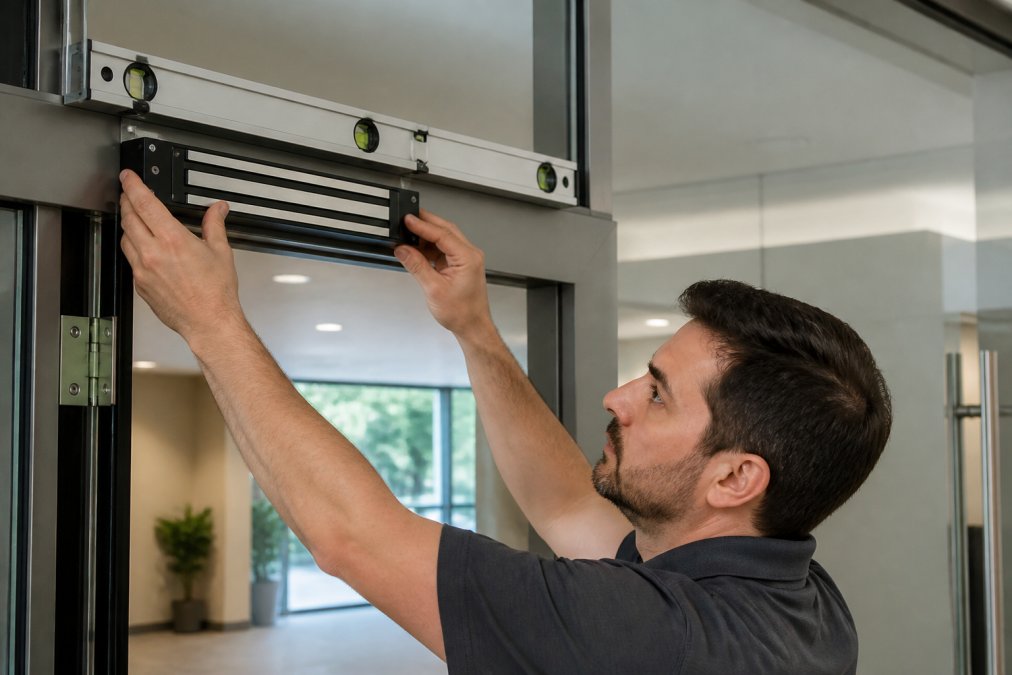
Professional installation involves electricians, security technicians, and project management. Electricians run power to readers and locks, requiring conduit work, wiring, and potentially structural modifications. Security technicians configure the system, test credentials, and train staff. On a 50-door installation across multiple floors, labor costs typically exceed hardware costs.
Installation labor varies significantly by geography and facility complexity. Straightforward installations in single-story facilities with existing electrical infrastructure cost less than retrofitting multi-building campuses with concrete walls and legacy systems. Buildings with asbestos or lead paint require specialized containment procedures, driving costs higher.
Many organizations consider DIY installation to reduce costs. This works for simple systems with basic credential readers and magnetic locks, but creates real risks. Improperly installed locks fail under stress. Misconfigured systems create security gaps. Incorrect wiring creates fire hazards. Professional installation typically includes system testing, documentation, and warranty support that justify the expense.
The labor-to-hardware ratio typically ranges from 1:1 to 3:1 depending on facility complexity (nist.gov). Straightforward office buildings might see 1:1 ratios, while healthcare facilities with specialized access requirements and compliance documentation could see 3:1 or higher.
Cloud-Based Access Control Subscription Pricing Models
Cloud-based access control has become dominant for new installations because it eliminates server maintenance and enables remote management. Understanding subscription structures is essential for evaluating true costs.

Per-door pricing charges a monthly fee for each credential reader or access point. A facility with 40 doors paying $25-40 per door per month generates $12,000-19,200 in annual software costs. This model scales linearly and is transparent but becomes expensive for large facilities.
Per-user pricing charges based on active credentials in the system. A healthcare facility with 200 employees might pay $10-20 per user per month, totaling $24,000-48,000 annually. This model encourages lean credential management but penalizes organizations with high employee turnover.
Tiered facility pricing bundles doors and users into packages. Small facility packages might cover 10 doors and 50 users for $500-800 monthly. Mid-market packages cover 50 doors and 250 users for $1,500-2,500 monthly. Enterprise pricing negotiates custom rates. This model rewards larger commitments but creates price discontinuities.
Setup and integration fees add to subscription costs. Integrating cloud-based access control with existing CCTV, alarm systems, or visitor management platforms typically costs $2,000-10,000 depending on complexity.
| Pricing Model | Best For | Cost Range | Key Advantage |
|---|---|---|---|
| Per-door | Small, simple facilities | $25-40/door/month | Transparent scaling |
| Per-user | High-turnover environments | $10-20/user/month | Flexible credential management |
| Tiered packages | Mid-market facilities | $500-2,500/month | Bundled simplicity |
| Enterprise custom | Large multi-site operations | Negotiated | Optimized pricing at scale |
Total Cost of Ownership Over Five Years
Evaluating smart access control system pricing requires looking beyond year-one expenses. A five-year total cost of ownership analysis reveals which systems deliver genuine value.
A typical small commercial facility (20 doors, 50 users) using a cloud-based system:
Year 1: Hardware ($8,000) + Installation ($6,000) + Software subscription ($6,000) + Integration ($3,000) = $23,000
Years 2-5: Annual software subscription ($6,000) + annual maintenance ($1,500) = $7,500 per year
Five-year total: $23,000 + (4 × $7,500) = $53,000
An equivalent on-premise system:
Year 1: Hardware ($12,000) + Server ($4,000) + Installation ($8,000) + Software license ($5,000) = $29,000
Years 2-5: Annual maintenance ($2,000) + IT support ($3,000) = $5,000 per year
Five-year total: $29,000 + (4 × $5,000) = $49,000
These examples illustrate why facility size matters. The on-premise system's higher upfront cost is offset by lower ongoing expenses. For a 100-door facility, cloud-based might exceed $150,000 over five years while on-premise stays under $120,000. For a 10-door facility, cloud-based stays cheaper because subscription costs remain manageable and you avoid server infrastructure entirely.
Hidden costs often appear in year two and beyond: software updates introducing new subscription tiers, integration requirements when adding systems, credential reader replacements as devices age, and compliance audits requiring additional reporting features. Organizations that plan for these contingencies build more accurate budgets.
Integration Costs and System Scalability
One of the most underestimated expenses in smart access control system pricing is integration with existing security infrastructure. Few facilities operate with access control alone; most need to connect with video surveillance, alarm systems, visitor management, and time-and-attendance platforms.
Integration complexity drives costs up rapidly. Basic integration, connecting access control to CCTV so door events trigger video recording, typically costs $2,000-5,000 in professional services. Complex integrations involving custom API development, middleware configuration, and cross-platform data synchronization can reach $10,000-25,000 or higher.
System scalability affects both integration costs and long-term expenses. A system designed for 20 doors might require significant reconfiguration to handle 100 doors across multiple buildings. Some cloud-based platforms scale seamlessly; others hit performance thresholds or pricing tier boundaries forcing expensive upgrades. On-premise systems often require additional server capacity as you scale.
Multi-site management introduces additional costs. A healthcare organization with five clinic locations needs centralized access control working across all sites. Cloud-based systems handle this naturally through unified dashboards. On-premise systems require either replicating infrastructure at each site or building complex network connections between locations.
When evaluating smart access control system pricing, always ask about scalability costs. How much does it cost to add 50 more doors? What happens if you need to integrate with a new building management system? What's the cost difference between managing one facility versus ten?
Conclusion
Smart access control system pricing depends on hardware selection, software delivery model, installation complexity, and integration requirements. Cloud-based systems suit organizations prioritizing simplicity and remote management, accepting ongoing subscription costs. On-premise systems work for large facilities where upfront investment yields lower long-term expenses.
At Mt. Major Tech, we help organizations evaluate these trade-offs by analyzing specific facility needs, integration requirements, and five-year budget constraints. Our team combines hardware expertise with cloud-based system knowledge to recommend solutions delivering genuine security value without inflated costs. We handle complex integrations that unify access control with existing surveillance and alarm systems, ensuring you get a cohesive security platform.
The real decision isn't finding the cheapest system, it's identifying the system that protects your facility reliably while fitting your operational budget. NIST guidelines on physical access control provide framework standards for evaluating system requirements. Working with a security integrator who understands your facility's unique layout and the vendor landscape helps you avoid expensive mistakes.
Ready to evaluate your facility's access control needs? Book a consultation with Mt. Major Tech and we'll provide a detailed cost analysis for your specific situation.
Common Questions About Access Control System Pricing
What's the difference between a credential reader and a smart lock? A credential reader is a standalone device mounted on a door frame that reads key fobs, proximity cards, or mobile credentials. A smart lock is an intelligent lock mechanism that can be controlled remotely and typically includes a built-in reader. Smart locks cost more per unit but require less installation labor because they replace traditional locks entirely.
Can I install access control myself to save money? Simple systems with basic magnetic locks and wireless readers are DIY-friendly. However, professional installation ensures proper electrical work, system configuration, and security validation. Mistakes in installation create security vulnerabilities and potential fire hazards that far exceed professional labor costs.
How often do access control systems need upgrades? Most systems remain functional for 7-10 years before requiring significant upgrades. However, software platforms evolve faster than hardware. Expect to upgrade cloud software subscriptions annually or migrate to new platforms every 5-7 years as features and security standards advance.
What's included in annual maintenance contracts? Maintenance contracts typically cover software updates, credential reader battery replacements, lock mechanism service, and technical support. They don't usually cover major repairs or hardware replacements. Ask vendors specifically what's included before signing.
Does integrating multiple systems cost extra? Yes. Integration typically costs $2,000-25,000 depending on complexity. Basic integrations (access control triggering video recording) cost less than advanced ones (real-time data synchronization across multiple platforms). Budget for integration as a separate line item.
Frequently Asked Questions
How much does a smart access control system typically cost?
Smart access control system pricing varies significantly based on facility size, number of doors, hardware type, and whether you choose cloud-based or on-premise solutions. Residential systems start lower, while commercial multi-site installations with biometric authentication and real-time monitoring command higher investment. Contact Mt. Major Tech for a detailed quote tailored to your specific requirements and facility layout.
What factors influence the total price of a smart access control installation?
Key cost drivers include the number of credential readers and access points, choice between magnetic locks or electric strikes, installation labor complexity, integration with existing security infrastructure, cloud-based management subscription fees, and ongoing maintenance contracts. System scalability for multi-building campuses also affects pricing. Professional installation services typically represent a significant portion of upfront costs.
Are there recurring subscription fees for cloud-based access control?
Yes, cloud-based access control systems generally operate on a SaaS model with monthly or annual subscription fees for remote management, real-time monitoring, audit trails, and mobile credential access. These recurring costs provide continuous updates, data storage, and technical support. One-time hardware costs are separate. Compare total subscription expenses over five years when evaluating system choices.
Can Mt. Major Tech integrate a smart access control system with my existing security infrastructure?
Yes. Mt. Major Tech specializes in unified security integration, combining access control with existing cameras, alarms, and intrusion defense systems. Integration costs depend on your current setup's compatibility and the API connectivity required. Rather than replacing everything, our team assesses what can be bridged and what requires upgrade. Schedule a consultation to discuss your multi-vendor environment.