 ultimate-guide
Benefits of Biometric Access for Business Security
Table of Contents
- What Biometric Access Control Changes for Business Security
- Biometric vs Keycard Access Control Comparison
- Cost of Biometric Access Control Installation
- Biometric Security Compliance and Data Privacy
- Implementation Roadmap for Biometric Access
- Common Mistakes and What to Ignore
- Frequently Asked Questions
Last Updated: September 22, 2026
What Biometric Access Control Changes for Business Security
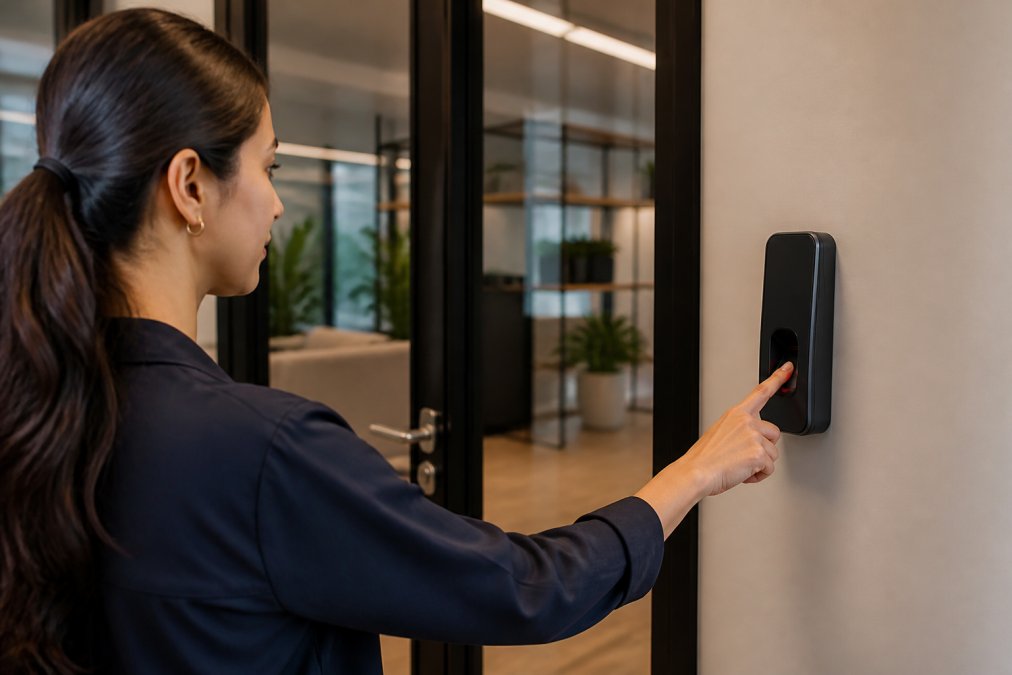
Biometric access control replaces keys, cards, and PINs with a physical characteristic that cannot be lost, lent, or copied. For most facilities, that single change removes the largest source of unauthorized entry: a credential that someone else can use. This guide from Mt. Major Tech covers what the technology actually changes, what it costs to run, and how to deploy it without creating new risk.
How Biometric Modalities Verify Identity
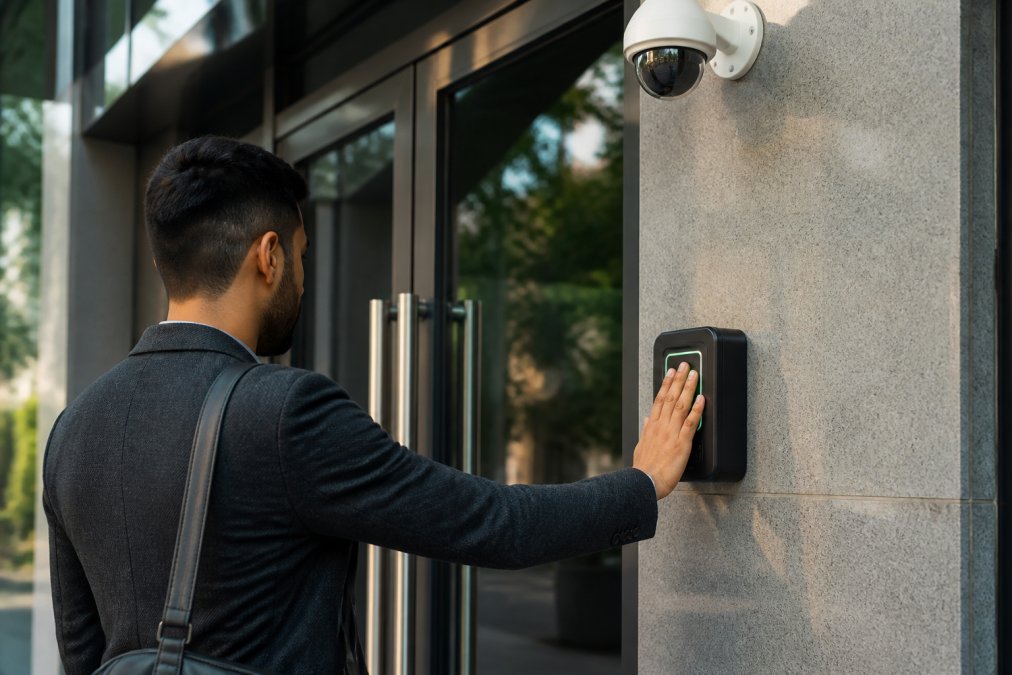
Each biometric modality captures a different trait and converts it into a mathematical template. A fingerprint reader maps ridge patterns; a facial system measures distances between facial landmarks; an iris scanner reads the pattern of the colored ring around the pupil. The template, not the raw image, is what gets stored and matched.
Why Credential Theft and Unauthorized Entry Drop
Biometrics tie access to a person, so there is nothing to steal and hand off. A lost badge is a security incident; a fingerprint cannot be left on a desk. This is also why biometrics strengthen multi-factor authentication: pairing a scan with a PIN creates two independent proofs of identity rather than two things a thief can find in the same bag.
Biometric vs Keycard Access Control Comparison
The honest answer is that most facilities should run both, not choose one. Biometrics win on identity assurance; cards win on speed at high-traffic doors and on cost. Comparing biometric vs keycard access control comparison points side by side makes the trade-offs clear.
Side-by-Side Comparison Table
| Factor | Keycard Access | Biometric Access |
|---|---|---|
| Identity proof | Card possession only | Physical trait of the person |
| Credential theft risk | High (cards are shared, cloned) | Low (nothing to hand over) |
| Enrollment speed | Fast (issue a card) | Slower (capture and store template) |
| False rejection | Rare | Possible (false rejection rate) |
| Cost per door | Lower upfront | Higher upfront |
| Best for | High-traffic, low-risk doors | Sensitive rooms, server closets, records |
Pros and Cons of Each Method
Keycards are cheap, fast, and familiar, but they fail the moment someone lends a card or props a door. Biometrics deliver non-repudiation, meaning an access log proves who entered, not just which card was used. The trade-off is cost and the occasional false rejection that frustrates users. A common mistake is deploying biometrics at every door instead of the doors that actually matter.
Cost of Biometric Access Control Installation
There is no single price for biometric access control installation, but the ranges are predictable enough to budget against. Pricing depends on the number of doors, the modality you choose, whether existing wiring and access control systems can be reused, and how much integration with video and logging you need. Mt. Major Tech quotes each project after a site walk because a single-door retrofit and a multi-building campus are entirely different jobs.
What Drives Project Pricing
The biggest cost variables are reader hardware, door hardware (electric strikes, maglocks, request-to-exit devices), cabling, software licensing, and integration labor. Retrofitting an existing access control system is usually cheaper than a full replacement because the panel, power, and door hardware are already in place. For current pricing on your specific site, request a quote rather than relying on generic estimates.
ROI and Cost-Benefit Analysis
The return on biometric access rarely comes from the hardware. It comes from eliminating reissued cards, reducing guard time spent on manual checks, and avoiding the cost of a single serious breach. To build a defensible business case, model four line items:
- Credential replacement savings. Track what you spend annually on lost, stolen, and reissued badges, plus the administrative time to issue them. Biometrics eliminates most of that recurring cost.
- Labor efficiency. If guards currently verify identities manually at sensitive doors, quantify the hours reclaimed once scans replace manual checks.
- Breach avoidance. A single insider incident, stolen records, unauthorized server room access, a compliance finding, can exceed the entire project cost. Assign a conservative probability and cost to that event.
- Compliance and audit value. Facilities that track access logs and audit trails often find the investigation and reporting value alone justifies the spend, especially in regulated industries where proving who entered a controlled area is a recurring requirement.
Biometric Security Compliance and Data Privacy
Biometric data is regulated more tightly than almost any other category of business data, and getting this wrong is a legal exposure, not an IT problem. A biometric template is considered sensitive personal information in several states, which means collection, storage, and retention all carry obligations.
Regulations That Apply in the United States
Illinois' Biometric Information Privacy Act (BIPA) is the strictest and most litigated biometric law in the country, requiring written notice, written consent, and a published retention schedule before collection. Illinois Biometric Information Privacy Act (740 ILCS 14) Texas and Washington have similar statutes. Sector rules add another layer: healthcare providers handling protected health information must account for biometric data under HIPAA Security Rule guidance.
Ethical AI and Bias Mitigation
Facial recognition accuracy varies across demographic groups, a well-documented problem that has led several large employers to restrict the technology. The mitigation is procedural, not just technical. Test your chosen modality against your actual workforce, keep a fallback credential for anyone the system fails repeatedly, and never deploy facial recognition for covert monitoring without clear notice.
Implementation Roadmap for Biometric Access
A biometric rollout fails when it starts with hardware and ends with a policy nobody wrote. Run it in phases instead, and treat each phase as a gate, do not advance until the prior phase is signed off.
- Phase 1: Assess (weeks 1-2). Inventory every door, classify each by risk level, and document existing systems, wiring, and panel capacity. Output: a prioritized door list and a compatibility check against your current access control panel.
- Phase 2: Define policy (weeks 2-3). Write the consent, retention, and fallback rules before any data is collected. This is also where you confirm which state privacy statutes apply and draft the written notice and consent language they require. Output: a signed data-handling policy.
- Phase 3: Pilot (weeks 4-6). Deploy at one or two sensitive doors and measure false acceptance rate and false rejection rate against your actual workforce, not volunteers. Output: a go/no-go decision with real performance data.
- Phase 4: Integrate (weeks 6-10). Connect readers to your access control system, video, and audit logs. Confirm the audit trail ties each entry to a verified identity, not just a credential. Output: a working, logged system at pilot doors.
- Phase 5: Scale and maintain (ongoing). Roll out by risk tier, then schedule ongoing firmware updates, template maintenance, and periodic re-testing of false rejection rates as your workforce changes.
Vendor-Agnostic Selection Criteria
Judge any provider on these criteria, not on brand:
- Supports open standards so it integrates with your existing panel
- Stores encrypted templates, not raw biometric images
- Documents its false acceptance and false rejection rates
- Offers a fallback credential for accessibility
- Provides local backup if cloud connectivity drops
- Commits to ongoing firmware and support, not just installation
- Can show how it handles a template deletion request under applicable state law
What a Realistic Timeline Looks Like
A single-door pilot can be live in under a month. A multi-building rollout with policy work, integration, and phased scaling typically runs one to two quarters, with the policy and pilot phases consuming the most calendar time, not the hardware install. Budget for that reality, and the project will not stall when the easy part finishes first.
Common Mistakes and What to Ignore
The most common failure is treating biometrics as a hardware purchase when it is a policy and integration project. Buyers also over-index on the modality and under-index on the controller, the software, and the support contract. Ignore anyone who promises zero false rejections; every system has some, and the honest vendors tell you the rate.
Frequently Asked Questions
What are the pros and cons of biometric access for business security?
Pros include stronger identity verification, fewer lost or shared credentials, lower credential theft risk, and audit trails that tie every entry to a specific person. Cons include higher upfront hardware costs, privacy and compliance obligations, false acceptance and false rejection rates that need tuning, and the fact that a biometric template cannot be reissued the way a keycard can. Most businesses weigh these against the operational efficiency gains and reduced unauthorized entry.
How does biometric access control improve business security compared to traditional methods?
Traditional keycards and PINs can be lost, copied, or shared, which weakens identity verification. Biometric access uses fingerprint, facial, or iris recognition tied to a person, so unauthorized entry requires defeating liveness detection rather than borrowing a card. Access logs and audit trails become more reliable, and multi-factor authentication can combine a biometric with a card or PIN for higher-risk areas.
Are biometric access control systems compliant with data privacy regulations?
Compliance depends on where you operate and what data you store. In the United States, Illinois BIPA, Texas CUBI, and Washington's HB 1493 set specific rules for collecting and storing biometric identifiers. Many states also require written notice and consent. Data encryption, limited retention, and storing biometric templates rather than raw images help meet these requirements. HIPAA adds further obligations for healthcare providers.
What drives the cost of biometric access control installation?
Pricing depends on the number of doors, reader type, existing wiring, integration with access control systems and video analytics, and whether you need cloud or on-premises storage. Multi-building campuses and high-security areas with liveness detection cost more. Mt. Major Tech does not publish fixed pricing because every site differs; book online for a quote based on your facility.
Modern threats do not wait for a lost badge, and neither should your security posture. Mt. Major Tech designs and supports unified biometric access control, AI-enabled surveillance, and intrusion defense for residential and commercial properties across Northern New England, backed by ongoing maintenance and technical care. If you are weighing biometric access for your facility, book online with Mt. Major Tech and get a site-specific plan that fits your budget and your compliance requirements.